






Bird-Friendly Window Film: What It Is and How It Prevents Bird Strikes
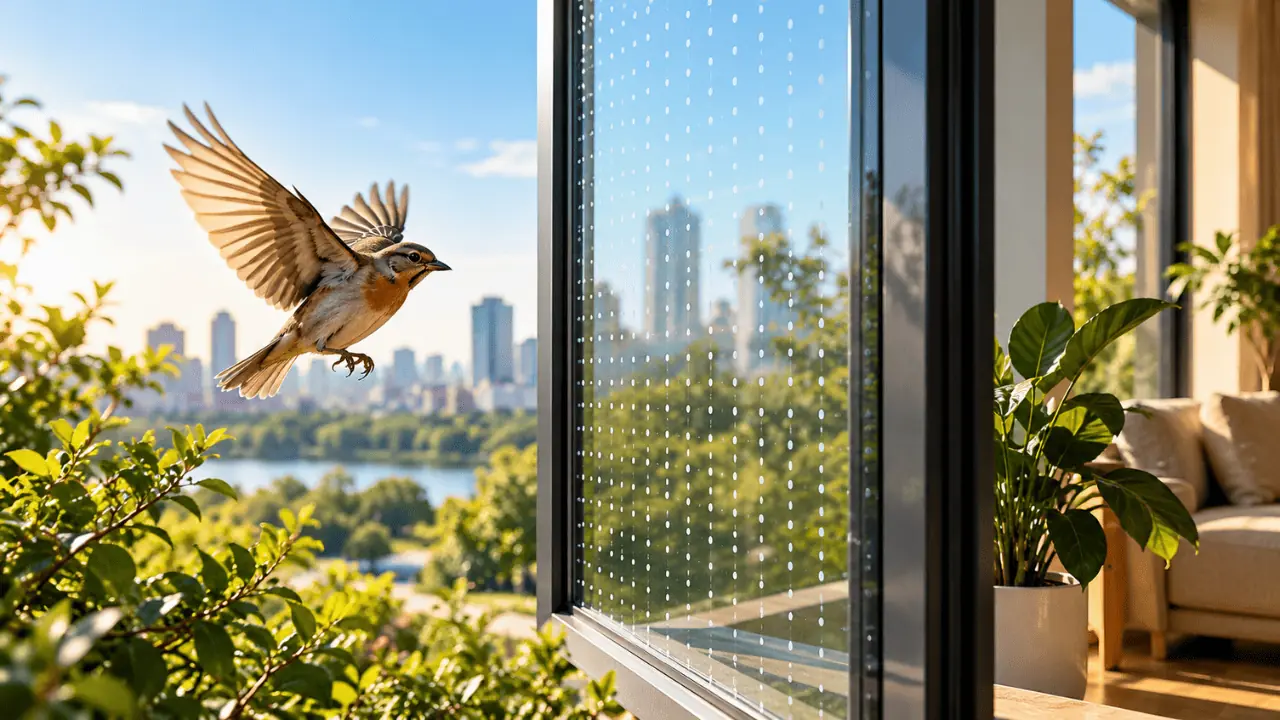
Bird-friendly window film is a specialized layer applied to glass that breaks up reflections and transparency to alert birds to the surface before they collide.
Every year, millions of birds are affected by transparent glass hazards, mistaking windows for open sky or clear flight paths. For architects, building managers, and homeowners, finding a solution that protects local wildlife without sacrificing natural light or modern aesthetics is a growing priority. Bird-safe window film offers a highly effective, scientifically backed method for bird collision prevention, helping to create truly wildlife-friendly buildings.
Why Do Birds Collide with Windows?
Birds crash into windows primarily due to two visual illusions created by modern glazing:
- Window Reflections: Glass often acts as a mirror, reflecting the sky, trees, or surrounding landscaping. Birds perceive this reflection as a clear, open flight path.
- Transparency: In some cases, birds can see straight through clear glass to plants, gardens, or habitats on the other side, perceiving a continuous "fly-through" path.
How Does Bird-Friendly Window Film Prevent Bird Strikes?
Birds perceive visual patterns and ultraviolet (UV) light differently than humans. Bird-safe window film leverages this biological difference to make glass visible to avian species. It helps reduce strikes by breaking up the mirror-like reflection of the outside world and introducing visual noise that signals a physical barrier, disrupting the illusion of a clear flight path.
Bird-Friendly Window Film Patterns: Spacing, Contrast and Coverage
For a window treatment to be effective, the visual markers must be dense and contrasting enough for a bird to recognize them as a solid obstacle.
What Is the 2 × 2 Rule for Bird-Safe Window Patterns?
Current guidelines from the American Bird Conservancy (ABC) and the Fatal Light Awareness Program (FLAP) recommend that patterns should generally be spaced no more than 2 inches (approximately 5 cm) apart horizontally and vertically. Visible, contrasting markers must cover the treated glass area to ensure a bird recognizes the entire space as an impassable physical obstacle, rather than a gap it can squeeze through. Always follow the tested product’s specific installation specifications.
Should Bird-Friendly Window Film Be Installed Inside or Outside?
Exterior placement (Surface #1) is the clear starting recommendation for bird collision prevention window film. The ABC notes that reflections on the outer pane of glass can completely hide markers applied to the interior. By applying the film to the outside, the visual barrier is the first thing the bird encounters, effectively breaking the reflection. Always verify product-specific compatibility, as some specialized interior films are designed to work in tandem with specific glass types, but exterior application remains the gold standard for stopping reflections.
Benefits of Bird-Friendly Window Film for Existing Buildings
- Wildlife Protection: Directly reduces the risk of fatal bird strikes.
- Cost-Effective Retrofit: Provides a bird-safe solution without the expense of replacing existing glass with patterned bird-safe glass.
- Aesthetic Flexibility: Options range from subtle, frosted dot patterns to bold architectural graphics, preserving the building's design intent.
- Sustainability Credits: Installing bird-safe window film for office buildings can help businesses comply with local wildlife ordinances and contribute to green building certifications, such as LEED pilot credits for bird collision prevention.
Which Windows Are Most at Risk of Bird Strikes?
Not all windows pose the same level of risk. Prioritize treatment for:
- Large expanses of glass, such as picture windows, glass doors, or atriums.
- Windows that reflect heavy vegetation, trees, or the sky.
- Glass corridors or windows where landscaping or indoor plants are visible on the opposite side.
- Windows located near known bird flight paths or feeders.
How to Choose Bird-Friendly Window Film for Bird Collision Prevention
Not all patterned films are equally effective. When selecting a product, prioritize the following:
- Verified Testing: Direct your search to documented testing resources, such as the American Bird Conservancy’s product database, to ensure the film meets the 2x2 spacing and contrast requirements.
- Durability: The film should be scratch-resistant and explicitly rated for long-term exterior application to withstand weather and UV exposure.
- Proven Products: Look for films with documented performance. For example, Bird-Friendly Window Film from Global Hi-Tech Films holds a Threat Factor (TF) rating of 20, tested under the American Bird Conservancy’s Tunnel Test, confirming its effectiveness in reducing bird-glass collisions while maintaining high visible light transmittance (VLT) and blocking >99% of UV rays.
Conclusion: How Bird-Friendly Window Film Helps Protect Birds
Bird-friendly window film is a highly effective, aesthetically versatile solution for helping to reduce bird strikes. By understanding the science behind avian vision and adhering to standards like the 2x2 rule, property owners can eliminate transparent glass hazards without compromising their building's design.
If you are looking to protect local wildlife, consult with a certified professional installer to evaluate your glass and select the right, tested bird-safe window film for your specific property. Making this simple upgrade is a powerful step toward creating safer, more sustainable environments.
FAQs About Bird-Friendly Window Film
- Does bird-friendly window film really prevent bird strikes?
Bird-friendly window film helps reduce bird strikes by adding visible patterns to glass, making windows easier for birds to recognize as physical barriers. Its effectiveness depends on pattern spacing, contrast, placement, and the surrounding environment. Choosing a film specifically designed for bird collision prevention is essential. - How does bird-friendly window film work?
Bird-friendly window film uses visible patterns, such as dots or stripes, to break up reflections and transparent areas on glass. These visual markers help birds recognize windows as obstacles rather than open flight paths, potentially reducing the risk of collisions. - Should bird-friendly window film be installed on the inside or outside?
Exterior installation is often preferred because patterns on the outdoor-facing surface can be more visible to birds against reflections. However, placement depends on the product and glazing system. Always follow the manufacturer's installation instructions and confirm compatibility with the existing glass. - What pattern spacing is best for preventing bird collisions?
Pattern spacing plays an important role in bird collision prevention. The commonly cited 2 × 4 rule uses markings spaced no more than 2 inches horizontally and 4 inches vertically. Tighter spacing, such as 2 × 2 inches, may provide better protection for smaller birds. Follow current bird-friendly guidance and product specifications. - Can bird-friendly window film be applied to existing windows?
Yes, bird-friendly window film can often be applied to existing windows, providing a retrofit solution without replacing the glass. Before installation, check the glass type, film compatibility, surface condition, and recommended application method to ensure suitable performance. - Does bird-friendly window film affect visibility from inside the building?
Bird-friendly window film can affect visibility depending on its pattern, size, and coverage. Some designs minimize visual disruption while making glass more noticeable to birds. Reviewing product samples and specifications can help property owners balance bird safety, natural light, and outward visibility. - Is bird-friendly window film different from standard UV-blocking window film?
Yes. Bird-friendly window film uses visible patterns or markers to help birds recognize glass as a barrier, while UV-blocking window film primarily reduces ultraviolet radiation entering a building. A standard UV-blocking film should not be assumed to prevent bird strikes unless its bird-collision prevention performance has been established.
.png)


 English
 German
 Spanish
 French
 Arabic
 Chinese
 Turkish
 Russian