






What Is Ceramic Window Tint & How Does It Work?
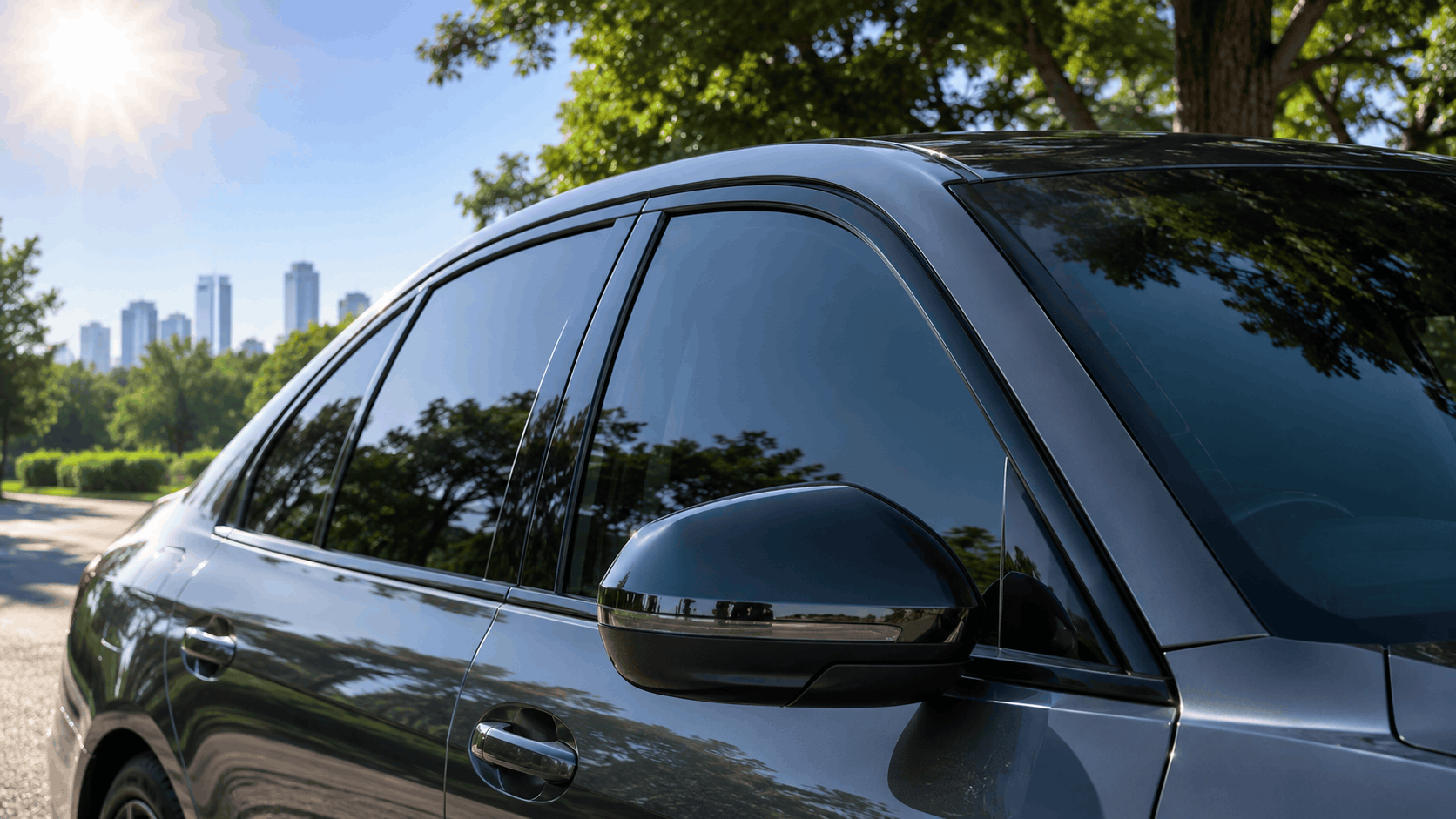
If you've ever climbed into a car that's been parked in the sun, you know the feeling. The seat burns, the steering wheel is too hot to touch, and the AC takes forever to catch up. That's usually when drivers start looking into ceramic window tint.
So, what is ceramic window tint? It's a high-performance tint made with microscopic ceramic particles that block heat and harmful rays without turning your glass into a blackout screen. Here's how it works, what it costs, and whether it's worth it.
What Is Ceramic Window Tint?
Ceramic window tint is a thin, multi-layer tint applied to the interior surface of car windows. Unlike traditional dyed or metallic tints, it uses nano-ceramic technology, which incorporates microscopic, non-conductive ceramic particles to filter sunlight and reduce heat.
How Does Ceramic Window Tint Technology Work?
Ceramic window tint uses microscopic ceramic particles to filter sunlight as it passes through your car windows. These particles help reduce the amount of infrared (IR) heat and ultraviolet (UV) radiation entering the cabin while allowing visible light to pass through.
Unlike traditional dyed tints, ceramic tint does more than darken your windows. It helps keep the interior cooler, protects surfaces from sun damage, and reduces glare without requiring a very dark shade.
Its key functions include:
- Infrared heat rejection: Helps reduce the heat entering your car, keeping the cabin more comfortable.
- UV ray protection: Blocks up to 99% of harmful UV rays, depending on the tint's specifications.
- Glare reduction: Minimises harsh sunlight, making driving more comfortable.
Key Benefits of Ceramic Window Tint for Cars
- Better heat rejection: Ceramic tint heat rejection stops infrared at the glass, so your car heats up slowly and cools down faster. For real solar heat reduction numbers, check the manufacturer's spec sheet rather than judging by shade.
- Interior protection: Interior fading protection comes from blocking the UV that bleaches leather and cracks dashboards.
- More comfortable driving: Less glare means less squinting at sunrise, sunset, and night.
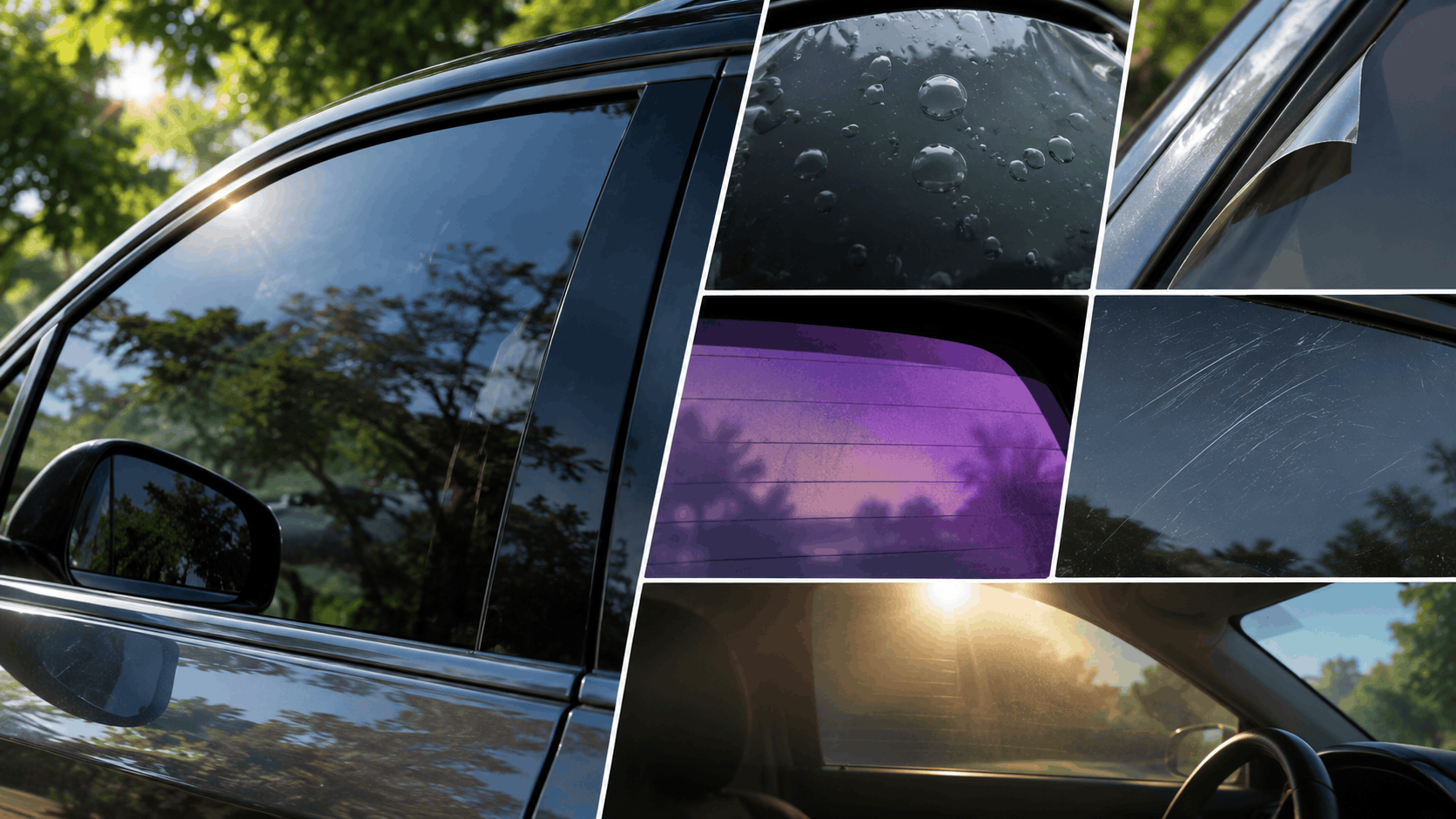
- Durability: Quality ceramic tint resists fading, bubbling, and turning purple.
Who Should Get Ceramic Window Tint for Their Car?
Ceramic window tint is a practical choice for drivers who want to reduce heat, minimise glare, and protect their car's interior from sun damage. It helps most for:
- Daily commuters who park outdoors
- Families with kids in the back seat
- Drivers in hot, sunny states like Arizona, Texas, and Florida
- EV owners who want to ease the load on the AC
- Anyone with a leather interior
Most people tint the side and rear windows, and some add a clear tint to the windshield. Rules vary by state, so check your local laws first.
Understanding VLT and Legal Limits for Ceramic Tint
Visible light transmission (VLT) is the percentage of visible light that passes through the glass and tint together. A 70% VLT is quite light; 5% is very dark. Here's the nice part about ceramic: a lighter ceramic tint can often beat a darker, cheaper tint at blocking heat, which helps if your state has strict VLT limits. Always check the rules for each window before choosing a shade.
Ceramic Window Tint vs Regular Tint: Key Differences
Here's a quick look at ceramic window tint vs. regular tint:
Feature | Ceramic Tint | Regular (Dyed) Tint |
| Heat rejection | High | Low to moderate |
| UV protection | Excellent | Moderate to good |
| Glare reduction | Strong | Moderate |
| Fade resistance | Very good | Can fade or turn purple |
| Lifespan | Long | Shorter |
| Price | Higher | Lower |
Regular dyed tint mostly absorbs light, so it looks dark but doesn't do much against heat. Ceramic gives you strong performance without the signal issues of older metallic tints, which is why it's often seen as the premium choice.
Tips for Choosing the Right Ceramic Window Tint
Finding the best ceramic window tint comes down to looking past the shade and checking the performance details that actually keep your car cool, protected, and street-legal.
- Read the spec sheet. Look at IR rejection, UV blocking, and VLT, not just the shade name.
- Know your state's laws before picking a darkness level.
- Ask about the warranty against bubbling, peeling, and fading.
- Choose a trusted brand. Global Hi-Tech tints offers ceramic window tint built for lasting clarity and consistent heat control.
- Use a professional installer. Even great tint looks bad if it's applied poorly.
Taking a few extra minutes to verify these details upfront ensures you get a clean, long-lasting installation that performs as well as it looks.
Conclusion
Ceramic window tint is about more than looks. Through nano-ceramic technology, it cuts heat, blocks UV, softens glare, and helps keep your interior fresh, all while staying signal-friendly and clear. It costs more upfront than regular tint, but the comfort and longevity usually make up for it.
Ready to upgrade? Explore ceramic tints from Global Hi-Tech films and have them installed by a qualified professional for the best results.
About Ceramic Window Tint
- Is ceramic window tint worth the money?
For most drivers, yes. It offers stronger heat and UV protection than regular tint and tends to last longer. - Does ceramic tint block heat even if it's light?
Yes. Ceramic tints reject heat through their material, not their darkness, so a lighter shade can still keep things noticeably cooler. - Will ceramic tint affect my phone or GPS signal?
No. It's a non-metallic tint, so it doesn't interfere with cell, GPS, or radio signals. - How long does ceramic window tint last?
With proper installation and care, quality tint can last many years without fading or bubbling. Check the warranty for specifics. - Is ceramic window tint legal in the USA?
The tint type is legal, but VLT limits vary by state and window position, so check your state's rules. - Can I install it myself?
It's possible, but professional installation gives cleaner edges, fewer bubbles, and keeps the warranty valid.

 English
 German
 Spanish
 French
 Arabic
 Chinese
 Turkish
 Russian