






5 Signs It's Time to Replace Your Old Window Tint
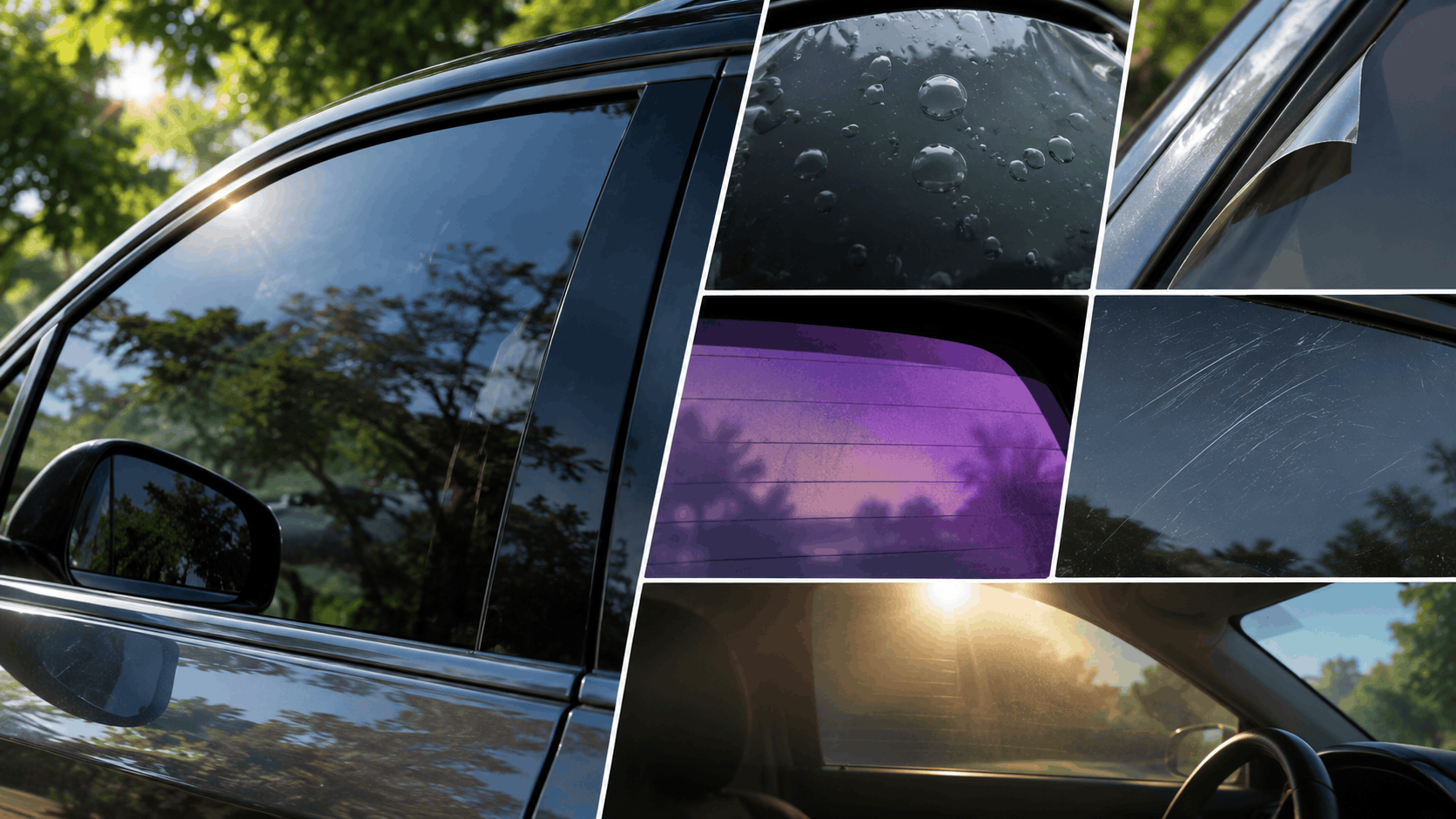
Window tint doesn't last forever. It might look perfect for years, then one day you notice a bubble on the back glass, a purple haze across the rear window, or a cabin that feels hotter than it used to. Knowing when to replace window tint helps you avoid poor visibility, keep your car comfortable, and stop old film from making your vehicle look neglected.
The good news is that old tint usually gives you clear warning signs. Below, we'll cover how long window tint lasts, the five biggest signs you need new window tint, and what to expect from a car window tint replacement.
How Long Does Window Tint Last?
Window tint lifespan depends mostly on the type of film, the quality of installation, and how much sun your car sees. Cars parked outdoors in states like Arizona, Texas, and Florida usually wear through tint faster than those kept in a garage up north.
Film Type | Typical Lifespan | How It Usually Ages |
| Dyed film | About 3–5 years | Fades, turns purple, loses heat control |
| Metalized film | About 5–10 years | Holds color well, may interfere with signals |
| Carbon film | About 5–10 years | Resists fading, stays matte |
| Ceramic film | Often 10 years or more | Holds color and heat rejection well |
These are general ranges, not guarantees. A quality film installed by a professional and cared for properly will last much longer than a cheap film rushed onto the glass.
5 Common Signs Your Car Window Tint Needs Replacement
1. Bubbling Window Tint
Bubbles are one of the most common old window tint problems. They appear when the adhesive that holds the film to the glass starts to break down, letting air or moisture get trapped underneath. Heat speeds this up, which is why bubbles often show up first on the rear window.
A few tiny bubbles right after installation are normal and usually disappear as the film cures. But bubbles that appear on older tint, or keep growing, are a clear sign the film is failing. Once the adhesive goes, it can't be fixed, so replacement is the only real solution.
2. Peeling Window Tint
If the edges of your film are lifting or curling, it's time to act. Peeling window tint often starts at the corners or along the top edge of roll-down windows, where the film rubs against the seals every time you open and close the window.
Peeling isn't just ugly. It lets dirt and moisture creep under the film, speeding up window film deterioration. It can also catch on the window seals and tear further. Trying to trim or glue it back down rarely lasts, so plan for car window tint replacement.
3. Faded or Purple Window Tint
Purple window tint is a classic sign of aging dyed film. Over time, UV rays break down the dyes, and the film shifts from a neutral black or charcoal to purple, brown, or a washed-out gray. Faded car window tint doesn't just look dated. It usually means the film has also lost much of its ability to block heat and glare.
If your discolored window film makes the car look tired or uneven, especially if some windows have faded more than others, it's a strong sign you need new window tint.
4. Scratched Window Tint
Your tint should never make it harder to see. Scratched window tint, haze, cloudiness, or a wavy, distorted look can all cause poor visibility through tinted windows, especially at night or in the rain. Scratches often come from rings, seat belts, pets, cargo, or cleaning with rough cloths and ammonia-based products.
This sign matters most for safety. If your film is making it harder to judge distances or spot pedestrians after dark, replace it as soon as possible.
5. Reduced Heat Rejection
Sometimes the signs of damaged window tint are easier to feel than see. If your car seems hotter on sunny days, the AC takes longer to cool the cabin, or you notice more glare and sun on your skin, the film may have lost much of its heat-blocking ability.
Reduced heat rejection is common with older dyed films. Upgrading to a modern carbon or ceramic film can make a noticeable difference in cabin comfort.
What Causes Car Window Tint to Deteriorate?
Knowing what wears tint down can help your next film last longer:
- Sun and heat: Constant UV exposure breaks down dyes and adhesives over time.
- Low-quality film: Cheaper dyed films simply aren't built to last as long as carbon or ceramic.
- Poor installation: Dust, trapped water, or rushed edge work can lead to early bubbling and peeling.
- Harsh cleaning: Ammonia-based glass cleaners and abrasive cloths can damage the film's surface.
- Everyday wear: Rolling windows down before the film cures, or scraping the glass with seat belts and cargo.
Car Window Tint Replacement: Process and What to Expect
If you're seeing one or more of the signs above, here's what a professional replacement typically involves:
- Removing the old film. Installers use heat and specialist tools to lift the film and adhesive without damaging the glass or the rear defroster lines. Doing this yourself is possible but slow, and it's easy to damage defroster lines.
- Cleaning the glass. Every trace of old adhesive needs to come off so the new film bonds properly.
- Installing the new film. The new tint is cut to fit, applied, and smoothed out.
- Curing time. Most installers recommend keeping windows rolled up for a few days while the film cures. A slight haze or a few small water pockets are normal during this time.
How to Choose the Best Replacement Window Tint?
A replacement is the perfect time to upgrade. Here's what to keep in mind:
- Pick a longer-lasting film. Carbon and ceramic films resist fading far better than dyed film. Ceramic offers the strongest heat rejection, especially in hot, sunny states.
- Check your state's tint laws. Each US state sets its own limits on how dark your windows can be. A professional installer will know the legal limits where you live.
- Ask about the warranty. Quality films usually come with coverage against bubbling, peeling, and color change.
- Choose an experienced installer. Good installation matters as much as the film itself.
Global Hi-Tech Films offers automotive window films designed to resist fading and keep cabins cooler, giving you a long-lasting option when it's time to replace your old tint.
Conclusion
Knowing when to replace window tint comes down to watching for a few clear signs: bubbling, peeling, fading or purple discoloration, scratches that hurt visibility, and a cabin that feels hotter than it should. Once film starts failing, it can't really be repaired, and leaving it in place only makes removal harder later. Replacing it with a quality carbon or ceramic film restores your car's look, comfort, and visibility, and gives you many more years of protection.
FAQs About Car Window Tint Replacement
- How long does window tint last?
It depends on the film. Dyed film often lasts around three to five years, while quality carbon and ceramic films can last ten years or more with proper care. - Can bubbling window tint be fixed?
Small bubbles on new tint usually go away as it cures. On older tint, bubbles mean the adhesive has failed, and replacing the film is the only lasting fix. - Why does window tint turn purple?
Cheaper dyed films use dyes that break down under UV exposure, causing the color to shift to purple over time. Carbon and ceramic films are much more resistant to this. - Can I remove old window tint myself?
You can, but it takes time and care, especially on the rear window, where it's easy to damage the defroster lines. Many drivers prefer to let a professional handle it. - How long does car window tint replacement take?
A full replacement can often be done in a few hours to a day, depending on the vehicle and how difficult the old film is to remove. - Can I roll my windows down after new tint is installed?
It's best to wait a few days so the film can cure properly. Your installer will tell you exactly how long to wait. - Is it worth upgrading to ceramic tint when replacing?
For most drivers, yes, especially in hot climates. Ceramic film offers stronger heat rejection and better long-term color stability than dyed film.

 English
 German
 Spanish
 French
 Arabic
 Chinese
 Turkish
 Russian