




Repair or Replace PPF After an Accident: How to Decide

Whether to repair or replace PPF after an accident depends on the condition of the film and the paint underneath. Paint protection film protects painted surfaces from everyday marks, but an impact can damage PPF, ranging from light scuffs to deep tears. A quick inspection can reveal whether the film needs a minor repair, section replacement, or complete replacement.
Here are the key factors that make the decision easier.
How to Decide Whether to Repair or Replace PPF?
Light surface scuffs and minor marks do not always require new film. Some damage can be corrected through heat treatment or other approved repair methods. A small damaged section may also be suitable for PPF panel replacement.
More serious damage calls for replacement. Film that has been pierced, stretched, torn, or developed edge lifting is less suitable for repair. Replacement is also necessary when the impact has caused car paint damage, dents, or other body repair needs.
If the panel requires panel repainting, the existing film must be removed before repair. New film should only be installed after the paint has properly cured. A trained installer should inspect the damage before any decision is made.
When Can PPF Be Repaired After an Accident?
Not every case of damaged PPF needs replacement after an accident. Minor marks can often be treated with heat, while some films may self-heal light surface damage.
Small areas of edge lifting may also be corrected when addressed early. A tiny isolated film tear may sometimes be patched, depending on its location and extent.
Repair works best when the film is mostly intact, and the paint underneath is undamaged. In such cases, paint protection film repair can be a practical fix for minor damage. An installer inspection can confirm whether the repair will hold up.
When Should PPF Be Replaced After an Accident?
Some damage is beyond practical repair. PPF replacement after accident damage is generally the better option when the film has suffered a deep cut, puncture, tear, or significant stretching.
Replacement is also recommended when:
- The film has deep scratches or cuts.
- There is adhesive failure or extensive lifting.
- The impact has distorted the film.
- The panel needs dent repair or other body repair.
- The underlying paint needs repair or repainting.
- Older surrounding film has yellowed or changed appearance.
In these situations, replacing the paint protection film across the affected panel can provide a cleaner result than patching. A full-panel solution is often preferable when replacing PPF after car accident damage without creating obvious differences.
What Happens to PPF During Body Repair or Repainting?
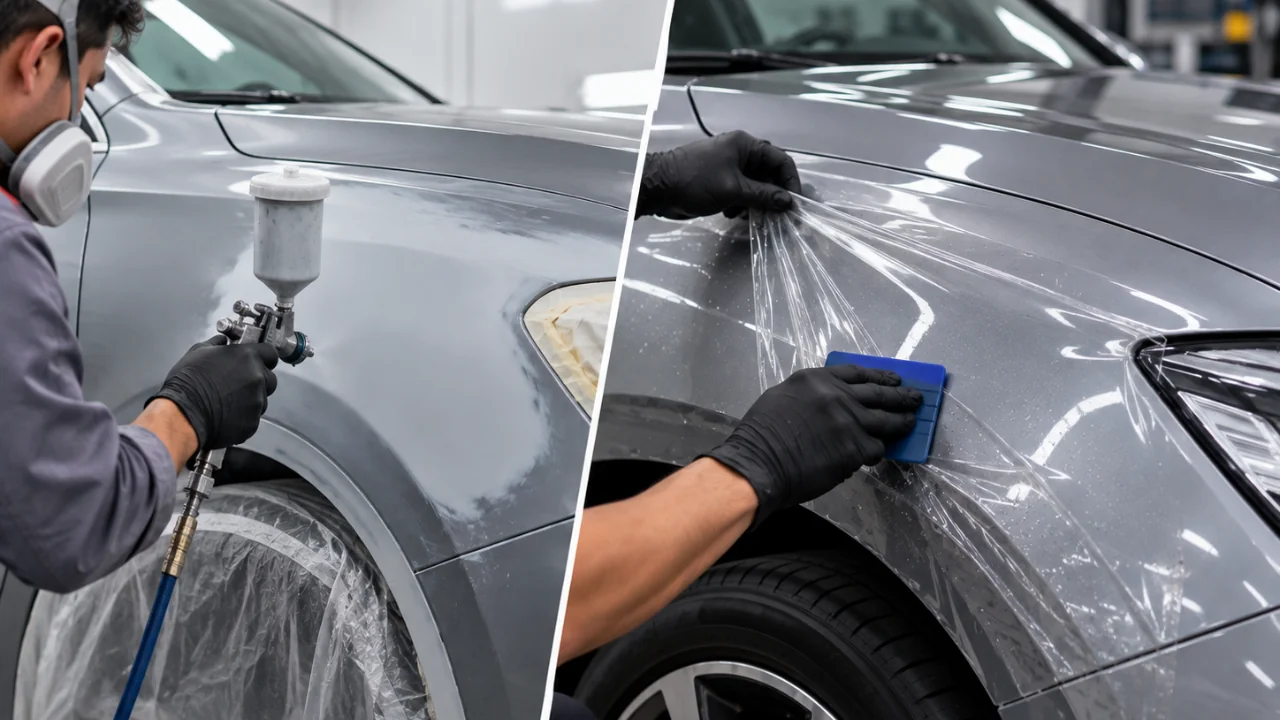
PPF usually needs to be removed before dent correction, sanding, filling, or other accident repair work. Keeping damaged film on the panel can interfere with the repair process.
Once panel repainting is complete, the paint must be allowed to cure according to the body shop's process and paint manufacturer's guidance. Installing new film too soon can affect adhesion and the finished surface.
After the paint has stabilised, the installer can apply new PPF. Keeping repair invoices and installation records also provides useful warranty documentation.
Does Insurance Cover PPF Replacement After an Accident?
Document the damage before removing any film. Clear photographs can show the condition of the vehicle and PPF immediately after the accident.
Keep the original PPF invoice, product information, warranty documents, and installer estimate. These records can support a PPF insurance claim, although coverage depends on the individual policy.
It is also useful to keep recommendations from both the body shop and PPF installer. Their assessments can explain why replacement was required and help support the insurance claim.
PPF Repair vs Replacement: Quick Decision Checklist
The following checklist provides a quick reference for common accident situations.
Situation | Recommended Action |
Light surface scuff | Inspect and repair if possible |
Small surface mark | Self-healing or installer correction |
Small edge lift | Correct early |
Tiny isolated tear | Patch or replace section |
Deep cut or pierced film | Replace affected panel |
Paint damage underneath | Repair paint, then install PPF |
Dent or body repair | Remove PPF before repair |
Old or yellowed film | Consider larger replacement |
Insurance claim | Photograph and document first |
The paint condition and extent of film damage should ultimately determine the repair method.
Common PPF Repair and Replacement Mistakes to Avoid
Avoid peeling damaged car PPF yourself, especially when paint or body damage may be present. Do not ignore lifted edges, as dirt and moisture can get underneath.
Avoid patching over damaged paint or applying new PPF before the paint has cured. Take photos before removal and keep invoices, warranty records, and insurance documents for the claim.
A small patch may not always give the best finish. If the damage is extensive or the surrounding film has aged, full-panel replacement can provide a cleaner match.
Top companies like Global Hi-Tech Films can help assess the film's condition and determine whether repair or replacement is the better approach for a clean, consistent finish.
What Is the Right Solution for Damaged PPF?
The best way to answer whether damaged PPF can be repaired is to check whether the paint underneath is still intact. Though minor PPF damage may be repairable, more serious damage, including deep cuts, tears, stretching, adhesive problems, or paint damage, usually requires replacement.
For PPF repair after accident damage, freshly repainted panels should be allowed to cure properly before new film is installed. Photos, invoices, warranty records, and installer reports can also help support an insurance claim.
After an accident, inspect the paint first, then decide whether the PPF can be repaired, partially replaced, or fully reinstalled.
FAQs About PPF Repair and Replacement After an Accident
- Can damaged PPF be repaired after an accident?
Yes. Minor scuffs, surface marks, and some small lifted areas can sometimes be repaired if the paint underneath remains undamaged. - When should PPF be replaced after a car accident?
Generally, replace PPF when it is deeply cut, torn, pierced, stretched, or affected by significant adhesive failure. - Can only one section of PPF be replaced?
Yes. An installer can replace an affected section or panel when the surrounding film remains in good condition. - What if the paint under the PPF is damaged?
The paint should be repaired first. New PPF can be installed after the repaired surface has properly cured. - Can new PPF be applied after repainting?
Yes. The paint must first cure according to the body shop and paint manufacturer's recommendations. - Does insurance cover PPF replacement after an accident?
Coverage varies by policy. The insurer should confirm whether PPF replacement is included in the accident claim. - Should I remove damaged PPF myself?
Professional removal is recommended, particularly when the accident may have damaged the paint or body underneath. - Will the new PPF match the old film after replacement?
It can match closely, although differences in film age, finish, clarity, and exposure may make new and old sections slightly different.

 English
 German
 Spanish
 French
 Arabic
 Chinese
 Turkish
 Russian