






Interior vs Exterior Architectural Window Film: Which Application Is Right for Your Glass?
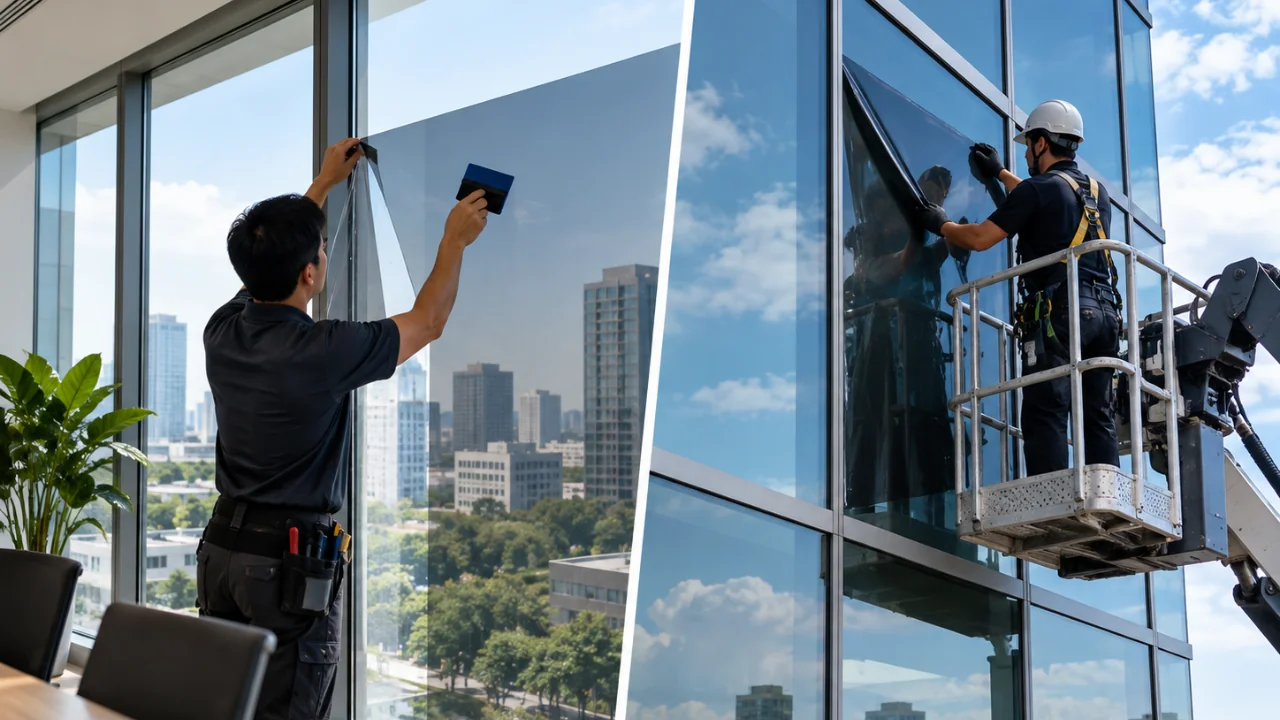
Interior window film is common for many projects, while exterior film may suit specific heat, access, or glass requirements. Interior vs exterior architectural window film mainly depends on where the film is installed and what the glass requires. Interior window film is fitted inside the building, while exterior window film is fitted outside. Both can help reduce solar heat gain, glare, and UV exposure.
Glass type, site access, climate, and project requirements all matter when choosing an application.
Here’s what to consider when comparing interior and exterior film for a commercial project, from installation and cost to maintenance and performance.
How Do Interior and Exterior Window Films Differ?
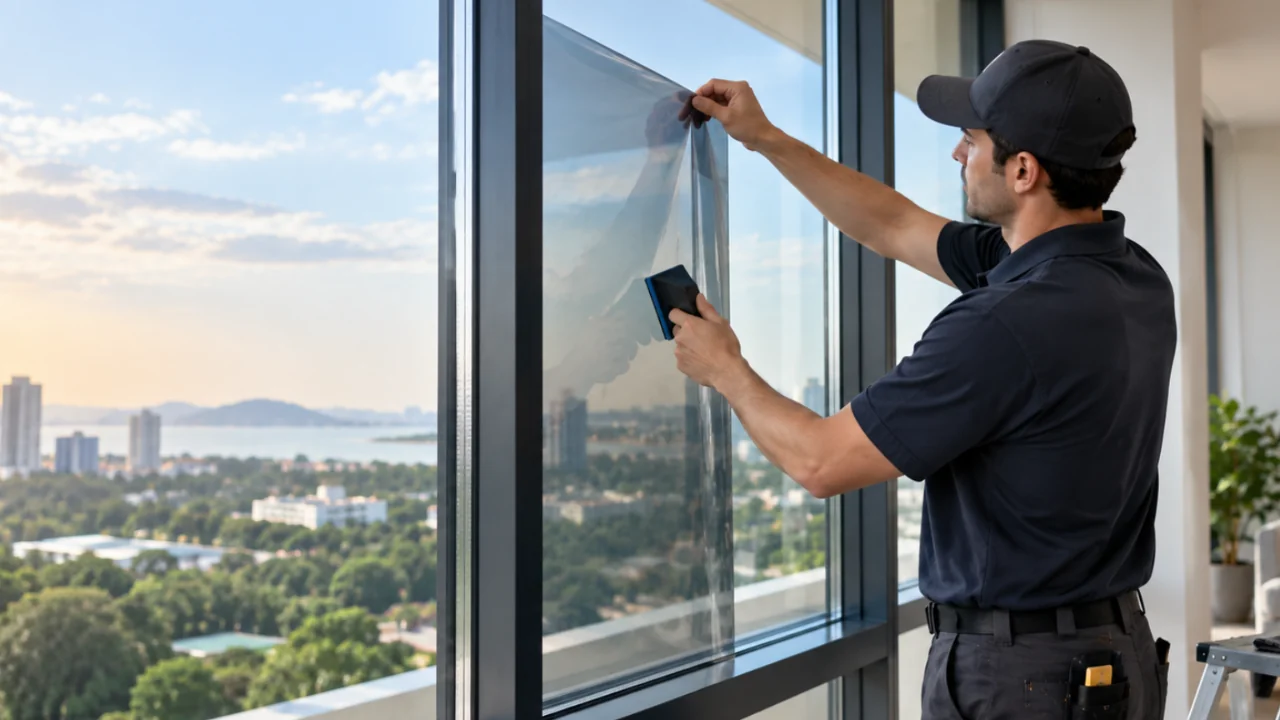
Interior window film is applied from inside the building. This is the usual setup for offices, retail stores, hotels, and many retrofit projects. Being indoors also keeps the film away from rain, dust, and other outdoor conditions.
Exterior window film is installed on the weather-facing surface. This allows it to reject solar energy before it passes through the glazing, which can be useful where heat build-up is a major concern.
Glass type and project conditions help determine which application works.
Interior vs Exterior Window Film: Quick Comparison
Before choosing an architectural window film, B2B buyers should compare how each application will work with the building and its glazing.
| Factor | Interior Window Film | Exterior Window Film |
| Best use | Standard retrofits | Heat-sensitive or access-led projects |
| Heat control | Good solar control | Earlier heat rejection |
| Durability | Usually longer lasting | More exposed to weather |
| Cost | Usually lower | Usually higher |
| Maintenance | Easier to maintain | Needs more planning |
| Glass type | Compatible standard glass | Some Low-E, IGU, or heat-sensitive systems |
For commercial window film, glazing, glass coatings, construction, and site conditions can all affect the choice between interior and exterior application.
When Is Interior Architectural Window Film the Right Choice?
If the glass is easy to reach from inside, interior solar window film is usually the simpler option. It is commonly used in offices, retail stores, hotels, and retrofit projects. Glare, privacy, decorative finishes, and branding are some of its common uses.
In commercial buildings, installing the film indoors may cost less. As the film is indoors, rain, dust, and other outdoor conditions don't reach it directly. That also means less weather exposure and simpler maintenance.
When Is Exterior Architectural Window Film the Right Choice?
Exterior solar window film is an option for façades, skylights, and atriums with strong sun exposure. It is also worth looking at when the inside of the glass is difficult to reach because of high ceilings, fixed interiors, equipment, or occupied spaces.
The film is exposed to weather outside. Rain, dust, and other outdoor conditions can affect it and make maintenance more frequent.
Interior vs Exterior Window Film: Which Provides Better Heat Control?
Exterior film can reject solar energy before the glass absorbs as much heat. This may help limit heat build-up within the glazing system, particularly on highly exposed façades and in hot climates.
An interior application can provide good solar control when the film is properly specified.
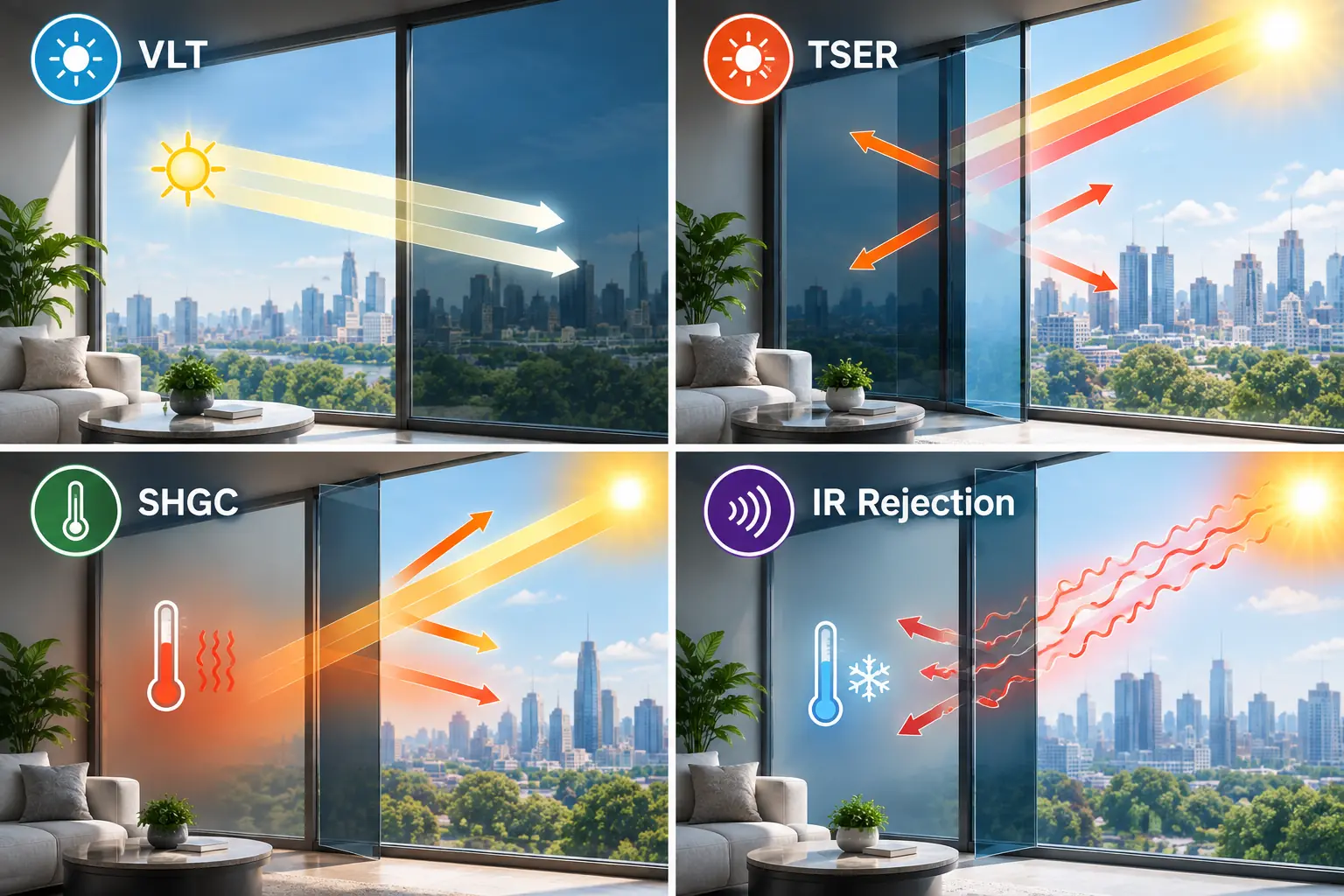
Film darkness alone does not tell how well it will perform. SHGC, TSER, VLT, and solar absorption also need to be checked for a better idea of its performance.
Interior vs Exterior Window Film: Cost, Durability and Maintenance
Rain, wind, and outdoor pollution do not directly affect interior film. It is easier to clean, and retrofit installation is generally less complicated.
Exterior film is directly exposed to sun, rain, wind, dust, and pollution. Access can be another concern. Depending on the building, lifts or scaffolding may be needed for façade access during installation and maintenance.
Can Window Film Be Applied to Double-Pane and Low-E Glass?
Glass construction is especially important when specifying window film for double-pane glass or Low-E glass. Double-pane glass, an insulated glass unit, and Low-E systems can respond differently to added solar absorption.
The position of a Low-E coating can affect which film is suitable. The type of glass and how much heat the film absorbs also need to be considered. On some glazing, an interior film can increase heat in the glass and cause thermal stress.
Before installation, refer to the manufacturer's specifications to ensure the window film is compatible with the glass.
How to Choose Between Interior and Exterior Window Film
The right application starts with a few basic checks:
- Glass type, coating, and construction.
- The main goal: heat, glare, UV, privacy, safety, or design.
- Building orientation, sunlight, and climate.
- Access to the glass from both sides.
- SHGC, TSER, VLT, and solar absorption.
- Cost, durability, maintenance, and warranty.
- Manufacturer and installer recommendations.
For B2B buyers, manufacturer data is worth checking before the film is specified. Global Hi-Tech Films offers product specifications that can be referred to during the selection process.
Common Window Film Specification and Installation Mistakes
Do not decide the film location before checking the glass. Some glazing systems suit exterior applications, while others may require interior application. Heat rejection alone is not enough to decide between the two.
The position of a Low-E coating is one of the things to check when selecting a film. Some types of specialized glazing can also have limitations on film use.
For complex commercial work, the specification should state the need for professional installation and glass compatibility checks.
Choosing the Right Window Film Application for Your Glass
There is no single choice for every project. Interior film is usually used for standard retrofits. Exterior film can make more sense on heat-sensitive façades or where the inside of the glass is difficult to reach.
The glass type, climate, site access, cost, warranty, and project performance goals all have a role in the choice. B2B buyers should compare the film data and get advice on glass compatibility.
The right application is not simply inside or outside, but the one that fits the glass system and the building’s performance needs.
FAQs About Interior vs Exterior Architectural Window Film
- What is the difference between interior and exterior window film?
Interior film is fitted inside the glass, while exterior film is fitted on the outside surface. - Is interior or exterior window film better for commercial buildings?
There is no standard pick. The glass, sunlight exposure, window access, budget, and project goals will determine the better fit. - Which window film is better for heat control?
Exterior film deals with solar energy before it reaches the glass. Interior film is another option when its specifications suit the glazing. - Does exterior window film last as long as interior film?
Sun, rain, wind, and dust all reach exterior film directly. This can mean a shorter lifespan and more maintenance. - Which film is better for double-pane or Low-E glass?
Film choice varies with the glazing. For Low-E glass, the coating position and film specifications are important. - What should B2B buyers check before choosing the application side?
Check the glass and coating, then review the film data, site access, maintenance, warranty, and manufacturer advice.


 English
 German
 Spanish
 French
 Arabic
 Chinese
 Turkish
 Russian