






How Window Film Reduces Screen Glare in Modern Offices

Natural light is important in modern offices, but too much of it can make a screen difficult to see. Large windows can bring direct sunlight, bright reflections, and glare from desks or floors into the workspace.
The right window film for screen glare can tone down this harsh light without making the office too dark. This helps improve visual comfort, daylight control, and workstation comfort for facility teams and employees.
Let us look at how film manages glare and what to consider when selecting one.
What Causes Screen Glare in Modern Offices?
Direct sunlight can wash out screens and make employees increase screen brightness to compensate. Bright windows can also create a strong contrast between the display and its surroundings, making prolonged screen use less comfortable.
Glare may also appear as light reflects from desks, floors, glass partitions, and other bright surfaces. This reflected glare can affect several workstations at once in an open-plan office, especially those close to large windows.
The position of the screen also makes a difference. A monitor facing a window will usually catch more glare than one placed at an angle. Good office glare solutions need to account for both the glazing and the workstation setup.
How Does Office Window Film Reduce Screen Glare?
A window film for computer glare reduces the amount of visible light coming through the glass. With less intense light around the workstation, there is less glare on the screen, and it becomes easier to see.
A suitable glare reduction window film can also reduce the contrast between a bright window and a darker monitor. This allows screens to remain easier to view without keeping blinds closed throughout the day.
For offices with extensive office glazing, commercial window film can provide consistent light control across large areas. Depending on the specification, it can also reject heat and block UV.
VLT and Office Glare Reduction: What Facility Managers Should Check
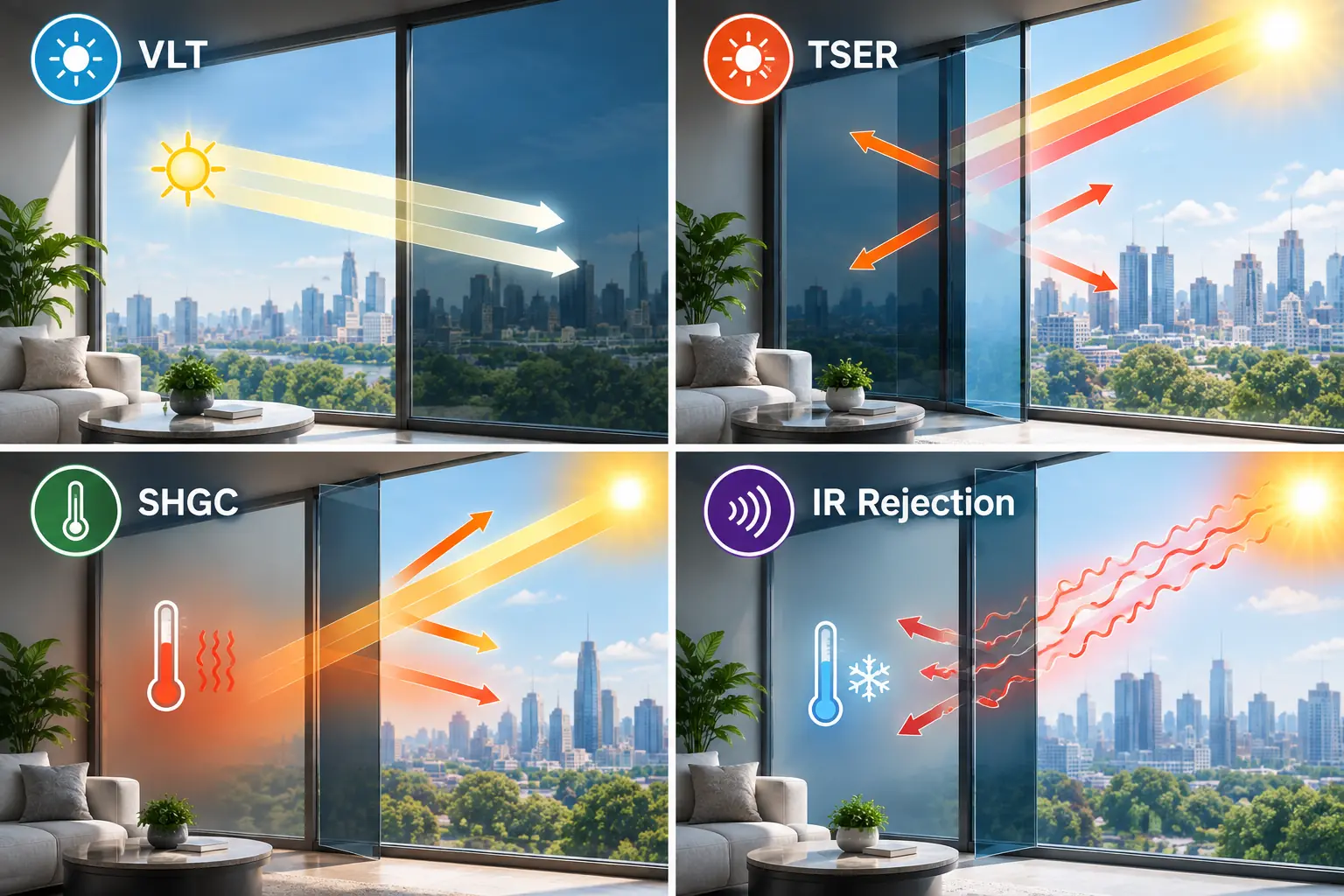
When addressing glare, consider window film’s VLT carefully. VLT, or visible light transmission, indicates how much visible light passes through the film and glazing.
Lower VLT generally allows less visible light into the space, which can help where glare is severe. Very low VLT, however, can reduce useful daylight. Higher VLT preserves more daylight but may provide less glare control.
The right VLT depends on the façade, window size, sun exposure, workstation setup, and when glare is strongest. Film selection should be based on these conditions, not just how dark the film looks.
Which Window Films Are Best for Office Screen Glare?
Different film constructions offer different ways to balance glare, heat, daylight, and appearance. Common options include:
- Ceramic office window film: A ceramic film can reduce glare and solar heat while maintaining a relatively neutral appearance.
- Dual-reflective window film: A dual-reflective film can provide stronger control of exterior brightness while retaining useful interior light.
- Neutral film: A neutral finish can suit offices where reduced reflectivity and a natural-looking view are priorities.
- Spectrally selective film: This option can manage solar energy while allowing a greater amount of visible daylight through the glazing.
The choice should reflect glare severity, glass type, solar exposure, and the desired appearance. A darker film is not automatically the right solution.
Direct vs Reflected Glare: What Is the Difference?
Direct glare comes straight from a bright window or sunlight and can fall on the screen or into the eyes. A desk facing a sunny window is more likely to have this issue.
Reflected glare is light that bounces off surfaces inside the office. Glass tables, shiny floors, desks, and partitions can all create it.
Window film for monitors can reduce the light coming through the glass, helping with one major source of glare. It will not stop reflections from interior surfaces or fix screen placement, so these factors also matter.
Window Film vs Blinds: Which Is Better for Office Glare?
Office window film reduces glare by cutting down harsh light coming through the windows without covering them. This keeps the outside view and much of the natural daylight, while blinds may not be needed when the glare is mild.
Blinds offer adjustable shading and can block more light when the sun is particularly strong. When closed, though, they also cut down daylight and outside views.
For offices with strong seasonal glare, using window film along with blinds can offer more control. The right choice depends on the building orientation, glazing, and when glare is strongest.
How to Choose Window Film for Office Screen Glare
The first step is to identify where glare is a problem and when it's worst. For window film for office screens, facility teams should look at:
- Glare-heavy façades and sun exposure
- Workstation and screen positions
- Times when glare is strongest
- VLT and glare-control performance
- Heat rejection and UV protection
- Glass specifications and compatibility
- The desired balance between daylight and outside views
For larger projects, professional assessment can help determine whether ceramic, dual-reflective, neutral, or another specification is appropriate.
Brands like Global Hi-Tech Films offer window film solutions that can be considered based on glare control, heat rejection, UV protection, and the specific requirements of the office glazing.
Choosing the Right Window Film for a Screen-Friendly Office
The right anti-glare window film for offices can make screens easier to see without taking away too much natural daylight. VLT matters, along with the glazing, office layout, sunlight, heat, and outside views.
Good glare control is not about making windows as dark as possible. It is about cutting harsh light where it causes problems while keeping the office bright and usable.
The best office window tint reduces harsh light while keeping the workspace bright, comfortable, and screen-friendly.
FAQs About Window Film for Office Screen Glare
- How does window film reduce screen glare?
It reduces the amount of visible light coming through the windows, which helps cut down brightness and makes screens easier to see. - What VLT is best for reducing office glare?
There is no single ideal VLT. The suitable level depends on sunlight exposure, glazing, workstation position, and the desired daylight level. - Does anti-glare window film make an office too dark?
Not necessarily. Higher-VLT options can reduce excessive brightness while retaining useful natural daylight. - Which window film is best for computer screen glare?
Ceramic, neutral, and dual-reflective options can all be considered. The appropriate choice depends on the office's glazing and glare conditions. - Is window film better than blinds for office glare?
They work differently. Film gives steady glare control, while blinds can be opened or closed as needed. Using both may work well in offices with strong glare. - Can window film reduce glare without blocking the outside view?
Yes. It can cut down excess light without covering the windows, so the outside view remains visible.



 English
 German
 Spanish
 French
 Arabic
 Chinese
 Turkish
 Russian