






How to Verify Automotive Window Tint Performance: TSER, VLT and IR Rejection Explained
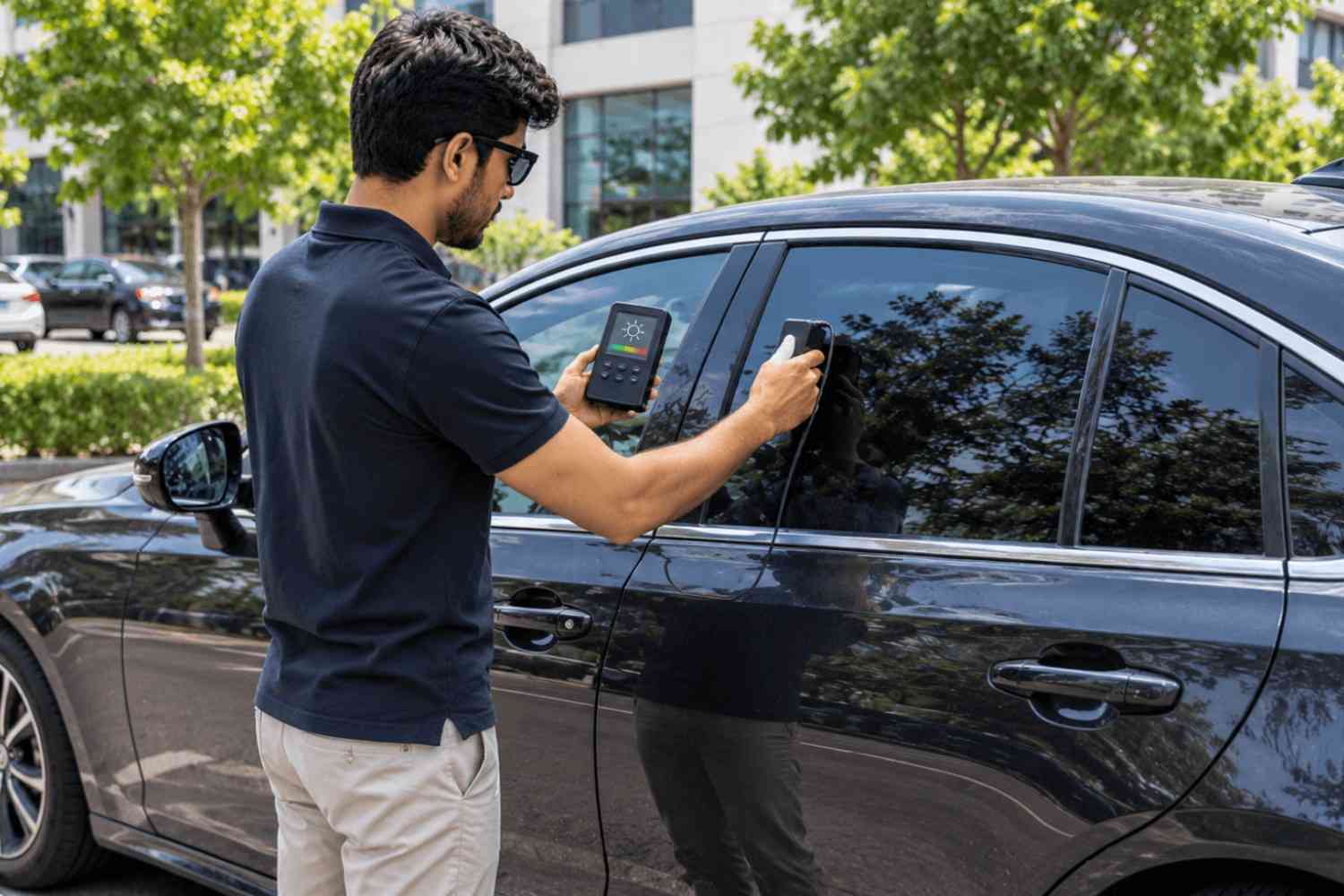
Choosing window tint based on a single performance percentage can lead to disappointing results. Automotive window tint performance depends on several factors, including visible light transmission (VLT), total solar energy rejected (TSER), and infrared rejection (IRR). Each metric measures a different aspect of the film’s performance, making it important to evaluate them together.
Tint darkness and heat protection are not the same. To understand how well a film performs, look beyond the advertised percentages and check what each specification actually measures.
What Is VLT in Window Tint, and How Can You Verify It?
VLT window tint is the amount of visible light that passes through the tinted glass. For example, 70% VLT allows more light through than 35% VLT. The right level depends on how much light you want inside the car and the tint laws in your area.
However, VLT does not directly measure window tint heat rejection. Two films with similar darkness can deliver different levels of solar heat control.
To verify VLT, review the manufacturer's window tint spec sheet for the exact shade. A tint meter VLT measurement can help check the installed glazing when accuracy or regulatory compliance is a concern. Remember that the glass itself also affects the final reading, so installed VLT may differ from the film's published rating.
What Is TSER, and What Does It Tell You About Heat Rejection?
TSER window tint shows how much solar energy the film prevents from passing through the glass. It gives a clearer picture of overall heat control than a measurement focused on just one part of the solar spectrum.
A higher TSER usually means better heat rejection. When comparing films, check their TSER ratings at similar VLT levels to make the comparison fair.
Before choosing a film, check the manufacturer's technical data sheet for the exact shade, glass type, and test methodology. Some ratings apply to the film alone, while others are measured with the film installed on glass. This difference matters when comparing products.
What Does Window Tint IR Rejection Mean, and Why Does the Test Range Matter?
IR rejection through window tint is often promoted through high percentages, with some films claiming 95% or even 99% rejection. These numbers need a closer look before they can be used to compare products.
The result depends on the wavelength range tested. A film may record high infrared rejection within a limited range without offering the same performance across the wider solar spectrum.
This is where TSER vs IR rejection becomes relevant. While TSER accounts for total solar energy rejected, IR rejection covers a specific part of that energy. Check the manufacturer's automotive tint specifications for the test range and any available broad-spectrum IR results before choosing a film.
VLT vs TSER vs IR Rejection: Key Differences Explained
When comparing window tint films, VLT vs TSER vs IR rejection comes down to three things: light transmission, overall solar heat rejection, and infrared performance.
Metric | What It Measures | Best Used For |
VLT | Visible light passing through glass and film | Darkness, visibility, and legal suitability |
TSER | Total solar energy rejected | Evaluating overall heat-control performance |
IR Rejection | Infrared energy rejected over a stated wavelength range | Understanding infrared-specific performance |
VLT indicates how much light passes through the glass, while TSER shows overall solar heat rejection. IR rejection adds useful information about infrared performance, provided the wavelength range is considered.
How to Verify Window Tint Specifications Before Buying
Before selecting a film, review the documentation and confirm that its published claims match the product being installed.
- Request the full specification: Obtain the manufacturer's window tint spec sheet or technical data sheet.
- Match the exact shade: Confirm that the VLT, TSER, and IRR figures apply to the film you intend to purchase.
- Check the IR wavelength range: Determine whether the advertised result covers a narrow band or a broader infrared spectrum.
- Verify the testing configuration: Establish whether the figures represent film-only performance or film applied to glass.
- Review UV rejection: Check UV rejection separately. Strong UV protection does not automatically mean strong heat rejection.
- Measure installed VLT if necessary: Use a calibrated tint meter when verifying the final glazing or checking regulatory compliance.
- Check local regulations: Confirm the permitted tint level for the relevant windows and vehicle category.
Once you know which specifications matter, you can compare films more carefully. Brands like Global Hi-Tech Films are worth exploring when looking for automotive window film options for your vehicle.
Common Mistakes When Comparing Window Tint Performance
Several comparison errors can make an average film appear better than a more capable alternative.
- Choosing by darkness: A darker tint may have lower VLT without delivering better overall heat control.
- Trusting IR percentages alone: High IR rejection does not necessarily mean high TSER.
- Comparing different shades: Differences in VLT can affect a fair comparison of heat performance.
- Ignoring test conditions: Different wavelength ranges and testing methods can produce figures that are not directly comparable.
- Mixing measurement configurations: Film-only results should not be compared directly with film-on-glass results without accounting for the difference.
- Confusing UV and heat protection: UV rejection measures protection against ultraviolet rays, while TSER indicates how much total solar energy the glazing rejects.
Check these figures separately when comparing films to avoid choosing a product based on a single advertised claim.
Final Checks Before Choosing Automotive Window Tint
A window tint's actual performance comes down to its test results, not just the percentage displayed on the package. When assessing automotive window tint performance, check the VLT and TSER ratings, then look at how the manufacturer measured IR rejection. Make sure the figures match the shade being installed before making your choice.
Ask for the specifications of the exact film you plan to install. The figures on its data sheet will give you a better basis for comparing options than marketing claims alone.
Frequently Asked Questions
1. How can I verify whether a window tint's heat-rejection claims are accurate?
Ask for the manufacturer's test results and check whether the figures match the film shade you plan to install.
2. Should I compare TSER or IR rejection when choosing automotive window tint?
TSER is more useful for comparing overall heat rejection, while IR rejection shows how the film performs within a specific infrared range.
3. Why can two tints with similar IR rejection have different heat performance?
The films may reject different amounts of solar energy outside the infrared range used for testing.
4. How do I know if the VLT listed on a tint spec sheet matches the installed tint?
Measure the installed glazing with a tint meter and compare the result with the manufacturer's specifications.
5. Should TSER and IR rejection be compared at the same VLT level?
Yes, comparing similar VLT levels and consistent testing conditions provides a fairer assessment.
6. What should I check on a window tint technical data sheet before buying?
Check VLT, TSER, IR rejection, UV rejection, wavelength range, and testing conditions.
7. Can a dark tint have poor heat rejection?
Yes, a darker tint does not necessarily provide better solar heat rejection.
8. How can I tell if an IR rejection claim is based on narrow-band testing?
Check the stated infrared wavelength range and test methodology in the manufacturer's documentation.
.png)
.png)
 (1).png)

 English
 German
 Spanish
 French
 Arabic
 Chinese
 Turkish
 Russian