





Graphene Coating vs Ceramic Coating for Cars: Which Should You Choose?
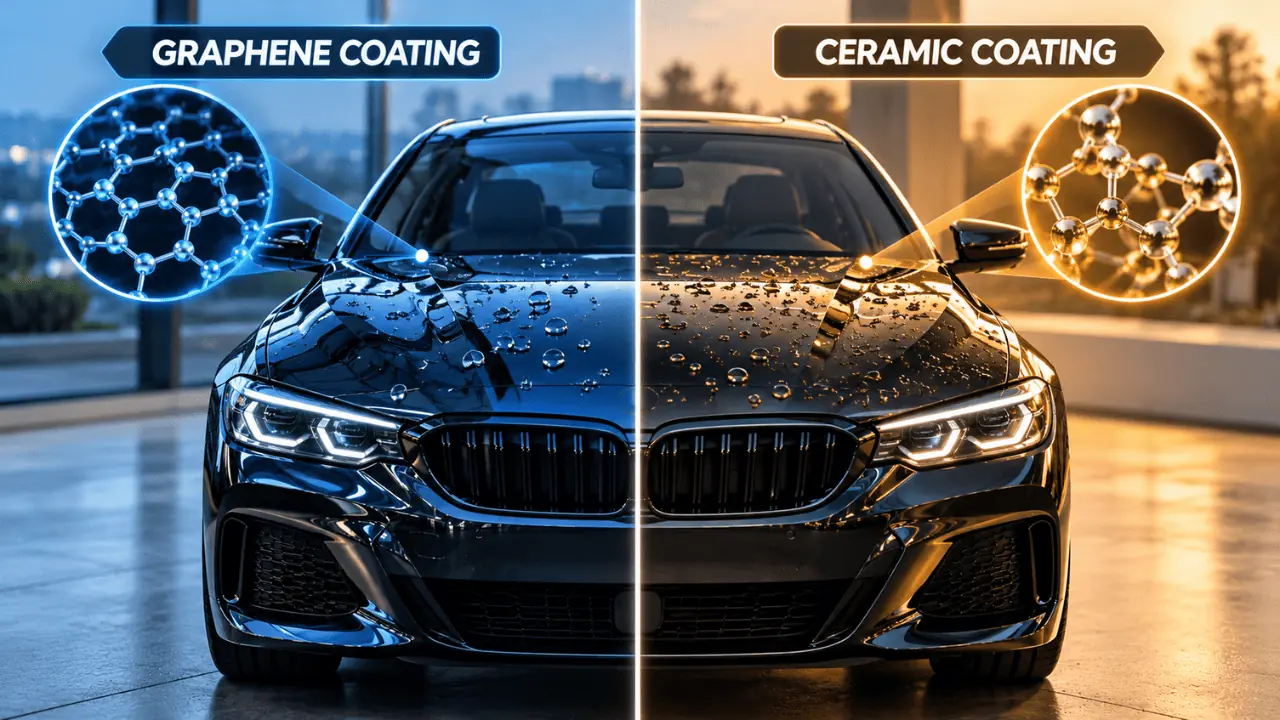
When it comes to long-term paint protection, the debate between graphene coating vs ceramic coating for cars is one of the most common questions among vehicle owners and detailers. Both offer exceptional defense against environmental contaminants, UV rays, and chemical etching, but they achieve these results through different chemical compositions.
The short answer is that both ceramic and graphene-infused coatings can enhance gloss, water repellency and resistance to environmental contaminants. Their actual performance depends on the product formulation, application quality and maintenance routine. When comparing graphene coating vs ceramic coating for cars, consider the warranty, durability claims, finish and care requirements rather than assuming one technology is always superior.
What Is Ceramic Coating for Cars?
Traditional ceramic coating for cars is a liquid polymer primarily composed of Silicon Dioxide (SiO2). When applied to a vehicle’s properly prepared paint, it chemically bonds with the factory clear coat, creating a semi-permanent, hard, and highly hydrophobic layer.
Key Characteristics:
- Exceptional Gloss: SiO2 is renowned for its ability to create a deep, wet-look shine that enhances the paint's color and clarity.
- Strong Chemical Resistance: Provides a robust barrier against acidic contaminants like bird droppings, tree sap, and industrial fallout.
- Proven Track Record: Ceramic coatings have been the industry standard for over a decade, with well-documented performance and longevity.
What Is Graphene Coating for Cars?
A graphene coating for cars is generally a coating formulation that incorporates graphene or graphene-derived materials into a protective coating system. Many products combine these additives with ceramic or other resin-based chemistry. Manufacturers may promote benefits such as water repellency, surface slickness and resistance to water spotting, but the results depend on the specific formulation and application. Graphene's material properties alone do not establish that a finished automotive coating will outperform a conventional ceramic coating.
Key Characteristics:
- Surface Slickness: Many formulations are designed to create an incredibly slick surface, which can make the washing process easier.
- Water Spot Resistance: Products are often engineered to reduce the likelihood of hard water spots, though proper maintenance is still required.
- Modern Formulation: Represents a newer evolution in surface protection, blending traditional ceramic chemistry with advanced carbon additives.
Graphene Coating vs Ceramic Coating: Key Differences
To help you decide, here is a direct comparison of how these coatings stack up across critical performance metrics.
Feature | Traditional Ceramic Coating (SiO2) | Graphene-Infused Coating |
| Primary Composition | Silicon Dioxide (SiO2) | SiO2 or resin base with graphene additives |
| Marketed Benefits | High gloss, chemical resistance, proven durability | Slickness, water spot resistance, modern hybrid chemistry |
| Visual Finish | Deep, high-gloss "wet" look | Rich, slick gloss |
| Hydrophobic Properties | Excellent | Excellent (varies by specific formulation) |
| Durability & Warranty | Varies by product (e.g., 3-year warranties) | Varies by product (e.g., 4-year warranties) |
| Price Point | Varies by brand and installer | Typically priced at a premium |
Graphene Coating vs Ceramic Coating: Pros and Cons
Traditional Ceramic Coating
- Pros: Delivers unmatched optical clarity and gloss; highly resistant to chemical etching; widely available with a long history of proven performance.
- Cons: Can be rigid; requires strict maintenance and proper washing techniques to avoid water spotting in hard-water areas.
Graphene Coating
- Pros: Often features exceptional surface slickness, making washing easier; many formulations aim to reduce water spotting; offers a rich, modern gloss.
- Cons: Typically priced at a premium; performance benefits depend heavily on the specific manufacturer's formulation rather than just the presence of graphene.
Which Is Better: Graphene or Ceramic Coating?
Neither is universally "better"; the right choice depends on the specific product you select and your personal priorities.
- Consider Graphene Coating if: You are looking for a modern formulation that emphasizes surface slickness and ease of washing, and you are willing to invest in a premium product that often comes with extended warranty terms.
- Consider Ceramic Coating if: You prefer a proven, traditional SiO2 formulation known for deep gloss and chemical resistance, often at a more accessible price point.
How to Choose the Best Coating for Car Paint
Regardless of whether you choose graphene or ceramic, the performance of the coating is only as good as the preparation and the product quality.
- Prioritize Paint Correction: Both coatings will permanently lock in whatever is on the paint. Professional paint correction (polishing) to remove existing swirls and defects is mandatory before application.
- Evaluate the Manufacturer: When evaluating car coatings, compare the product's stated durability, surface finish, chemical resistance and warranty terms. Global Hi-Tech Films offers both Graphene Coating (backed by a 4-year warranty) and Premium Ceramic Coating (backed by a 3-year warranty) as part of its car-care range. Review the specifications and applicable warranty conditions for each product to determine which option better suits your vehicle and maintenance preferences.
- Consider Professional Application: While DIY kits exist, professional installation ensures proper environmental control, precise application, and often includes a warranty on both the product and the labor.
- Commit to Maintenance: No coating makes a car maintenance-free. Use pH-neutral car wash soaps, avoid automatic car washes with harsh brushes, and use a compatible maintenance spray to rejuvenate the hydrophobic properties.
Graphene vs Ceramic Coating: Making the Right Choice
The decision between graphene and ceramic coating ultimately comes down to your specific priorities and the verified specifications of the products available to you. If you want a proven, high-gloss finish with excellent chemical resistance, a traditional ceramic coating is a phenomenal choice. If you prefer a modern formulation that prioritizes surface slickness and often comes with extended warranty coverage, a graphene-infused coating is worth considering.
Whichever path you choose, investing in a verified, professionally applied coating from a trusted brand will ensure your vehicle’s paint remains protected, vibrant, and easy to maintain. Always consult with a certified detailer to assess your paint’s current condition and recommend the optimal protection strategy for your vehicle.
FAQs About Graphene and Ceramic Coatings
- Is graphene coating better than ceramic coating?
Neither is universally better. Graphene coatings are often marketed for their slickness and potential water-spot resistance, while traditional ceramic coatings are prized for their deep gloss and proven chemical resistance. The best choice depends on the specific product formulation and your vehicle's needs. - What is the price difference between graphene and ceramic coating?
Graphene coatings are typically priced at a premium compared to traditional ceramic coatings due to the cost of the raw materials and the advanced formulation. However, exact pricing varies significantly based on the brand, the level of paint correction required, and the installer's expertise. - How long do graphene and ceramic coatings last?
Longevity varies by product, application quality, and maintenance. Rather than relying on general lifespan claims, check the manufacturer's specific warranty. For example, premium options may offer 3-year or 4-year warranties depending on whether you choose a ceramic or graphene formulation. - Can graphene or ceramic coating prevent rock chips?
No. While both coatings add a microscopic layer of hardness, they are not thick enough to absorb the impact of road debris. For physical impact protection against stone chips and scratches, Paint Protection Film (PPF) is required. - Can graphene coating be applied over an existing ceramic coating?
It is generally not recommended. The existing ceramic layer can prevent the new coating from chemically bonding directly to the clear coat, leading to poor adhesion. The old coating should be professionally removed or heavily polished before applying a new one, and you should always check the specific product system's compatibility guidelines. - What is the difference between graphene coating, ceramic coating and PPF?
Graphene and ceramic coatings are liquid polymers that chemically bond to the clear coat to enhance gloss, repel water, and protect against chemical etching and UV damage. Paint Protection Film (PPF), on the other hand, is a thick, physical urethane barrier applied to the paint to protect against rock chips, scratches, and physical impacts.

 English
 German
 Spanish
 French
 Arabic
 Chinese
 Turkish
 Russian