



Factory-Tinted Glass vs Aftermarket Window Film: What Is the Difference?
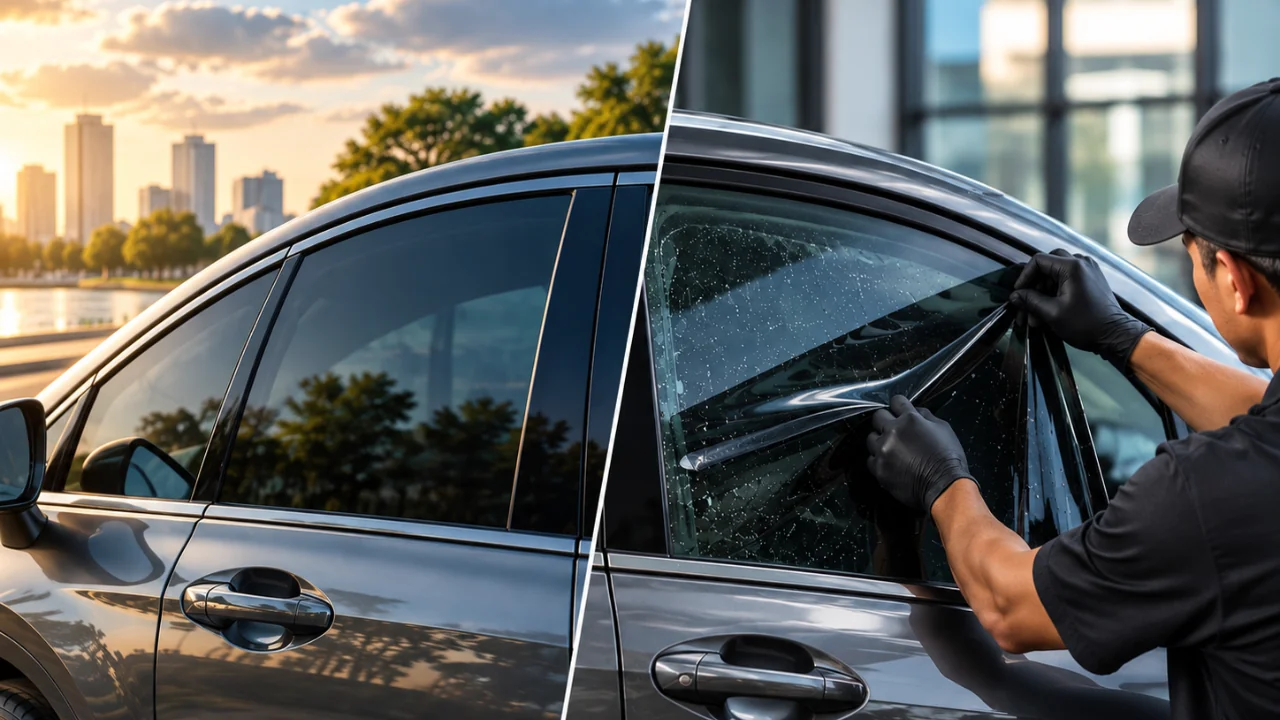
Factory-tinted glass vs aftermarket window film isn’t simply a choice between two ways of making car windows darker. Factory-tinted glass gets its color during glass production, while aftermarket window film is added after the vehicle is made. Both can improve privacy and appearance, but they differ in heat control, UV protection, glare reduction, and customization.
Understanding these differences makes it easier to choose the right option for a vehicle, especially when comfort and legal requirements are also important. Let us look at how each type works and where one may have an advantage over the other.
Factory Tint vs Aftermarket Window Film: Quick Comparison
The main difference is how they are made. Factory tint is part of the glass, while aftermarket car window film is applied as a separate layer to the existing window.
| Factor | Factory-tinted Glass | Aftermarket Window Film |
| How it is made | Tint is built into the glass | Film is applied later |
| Main purpose | Privacy and appearance | Heat, UV, glare, comfort, and privacy |
| Heat rejection | Usually limited | Higher with performance films |
| UV protection | Usually limited | Stronger with quality films |
| Durability | Permanent; no peeling or bubbling | Depends on film and installation |
| Customisation | Limited | Multiple shades and film types |
| Legal check | Usually factory-compliant | Must follow local VLT laws |
Factory tint vs aftermarket tint is about more than darkness. Factory glass has a fixed specification, while film offers more choice.
What Is Factory-Tinted Glass and How Does It Work?
Factory-tinted glass is tinted during manufacturing. Manufacturers incorporate pigment into the glass itself rather than adding it as a separate layer. It is commonly found on the rear windows of SUVs, trucks, and minivans.
This type of dyed glass is permanent and has no film layer that can peel or bubble. Since the tint is part of the glass, there is also no separate film surface to wear away.
The primary purpose of factory-tinted windows is usually privacy and appearance. They can also provide some glare reduction by limiting visible light. However, darker glass does not automatically provide strong heat or UV performance. The level of factory tint UV protection depends on the actual glass specification.
What Is Aftermarket Car Window Film and How Does It Work?
Aftermarket automotive window film is installed after the vehicle has been manufactured. A thin polyester film is fitted to the existing glass, usually on the inside.
One advantage is the range of materials available. Depending on the product, buyers can choose from dyed, carbon film, or ceramic film constructions. These options can be selected according to appearance as well as performance.
A quality aftermarket window tint can reduce solar heat, UV exposure, and glare while adding privacy. Higher-performance products can also provide infrared heat rejection, which helps reduce the amount of solar energy entering the cabin. Film quality and professional installation both affect the final result.
Factory Tint vs Aftermarket Film: Which Offers Better Heat and UV Protection?
A darker window is not necessarily a cooler window. Factory tint can reduce visible light and give the glass a darker appearance, but darkness alone does not indicate strong heat rejection.
This is where aftermarket tint heat rejection can make a difference. Performance films are designed to control solar energy rather than simply change the color of the glass. Ceramic window film is one option for improving heat control without always requiring a very dark shade.
Better solar control keeps the cabin more comfortable when the vehicle is parked or driving in strong sunlight. Quality aftermarket films also offer UV protection, which helps protect passengers and slow interior fading from long-term UV exposure.
Can You Apply Window Film Over Factory-Tinted Glass?
Yes, window film over factory tint is often possible. The main consideration is how the two layers affect the final darkness of the window.
Adding a dark film to already-dark glass can lower the final visible light transmission considerably. A clear or lighter ceramic film may therefore be more practical when the goal is heat and UV control without making the windows excessively dark.
The glass type and existing tint should be checked before installation. The aim should be better performance and comfort, rather than simply adding another dark layer.
VLT and Legal Considerations
Factory glass is generally supplied according to the vehicle manufacturer's specifications. An added film, however, must comply with applicable car window tint laws.
VLT window tint refers to visible light transmission. It indicates the percentage of visible light that can pass through the glass. A lower VLT means the window appears darker.
Requirements can differ between the windshield, front side windows, and rear windows. Adding film over factory-tinted glass can reduce the final VLT even further. Checking local tint laws before installation is therefore important.
Factory Tint or Aftermarket Window Film: Which Should You Choose?
Privacy may be all you need from factory tint. If heat and UV protection are bigger concerns, aftermarket film gives you more options.
A few things can help narrow it down:
- Climate: Hot, sunny weather makes better heat rejection more useful.
- Comfort: Ceramic and carbon films can help keep the cabin cooler.
- Visibility: A clear or lighter film adds protection without making the glass too dark.
- Protection: Quality film can add UV protection and help reduce interior fading.
- Legal limits: The final VLT must stay within the applicable limits.
Brands like Global Hi-Tech Films offer automotive window films focused on heat rejection, UV protection, and cabin comfort, with options suited to different performance and visibility needs.
The Right Window Tint Option for Your Car
Factory tint is part of the glass, so there is no separate film to choose or replace. It mainly adds privacy and changes the look of the windows. Aftermarket film gives you more room to choose what you need, from heat rejection and UV protection to glare control and comfort, along with different shades and materials.
Before installing film, the existing glass, final VLT, and applicable legal requirements should be considered together.
Factory tint may improve privacy, but aftermarket window film gives car owners more control over comfort, protection, and performance.
FAQs About Factory Tint vs Aftermarket Window Film
- What is the difference between factory-tinted glass and aftermarket window film?
Factory tint is part of the glass from the time it is made. Aftermarket film is added to the glass later. - Does factory tint block heat?
It can cut down some solar heat, though dark glass does not always mean better heat rejection. - Does factory tint block UV rays?
Some factory glass blocks UV rays, but the amount varies by glass type. - Is aftermarket window film better than factory tint?
It can offer better performance when heat rejection, UV protection, glare control, or customization is a priority. - Can window film be applied over factory-tinted glass?
Yes, in many cases. The existing glass and final VLT should be checked before installation. - Will adding film over factory tint make windows illegal?
It can if the combined glass and film reduce VLT below the applicable legal limit. - What is VLT in automotive window tint?
VLT means visible light transmission. It measures the amount of visible light that passes through the window. - Which is better for heat rejection, factory tint or ceramic film?
Quality ceramic film generally provides stronger heat-control performance than basic factory-tinted glass.

 English
 German
 Spanish
 French
 Arabic
 Chinese
 Turkish
 Russian