



Ceramic vs Carbon Window Tint: Key Differences, Benefits & Which Is Better for Your Car?
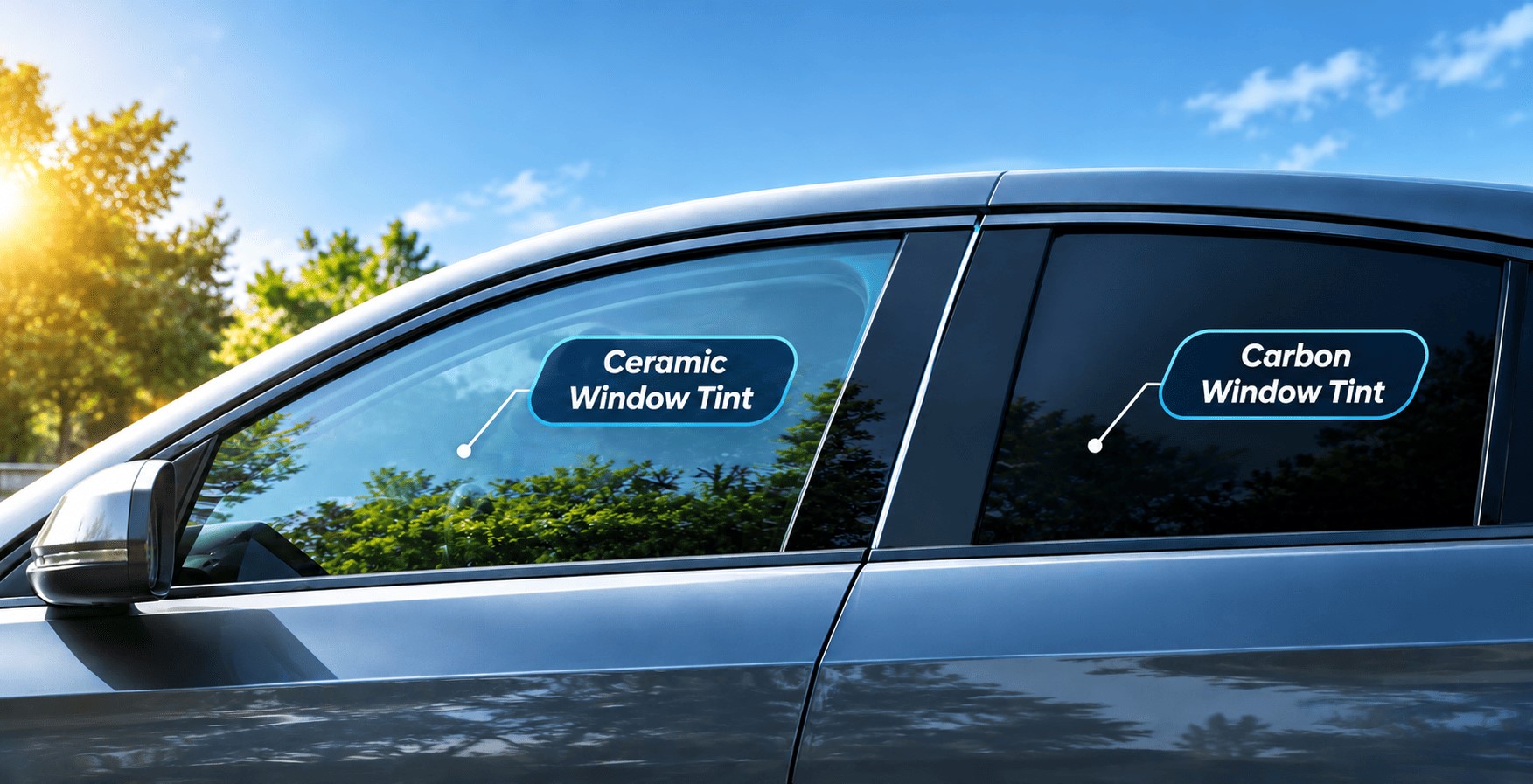
Climb into a car that's been parked in the sun for an hour and you'll understand why window tint matters. The right film keeps your cabin cooler, protects your skin and upholstery, and makes driving into the glare a lot easier. But when you start shopping, two options come up again and again, and that's where the ceramic vs carbon window tint debate begins.
Both are excellent, modern films that won't fade to purple or interfere with your phone. Carbon tint gives you solid heat control and a sleek matte look at a lower price. Ceramic tint costs more but blocks noticeably more infrared heat, often while staying lighter in shade. Which one is better for you comes down to your climate, your budget, and how long you plan to keep the car.
Below, we break down how each film works, compare them side by side, and help you decide.
What Is Carbon Window Tint and How Does It Work?
Carbon window tint is an automotive window film made with carbon particles built into its layers. Those particles absorb a good share of incoming solar energy, including infrared radiation, which is the part of sunlight you feel as heat. Because the film contains no metal, it doesn't disrupt GPS, cell, or radio signals.
Carbon film is known for its deep, matte-black finish. Unlike older dyed films, it holds its color well over time, so you don't get that faded, purple look after a few summers. For many drivers, it hits the sweet spot between performance and price.
What Is Ceramic Window Tint and How Does It Work?
Ceramic window film uses microscopic, non-conductive ceramic particles instead of carbon. These particles are especially good at targeting infrared light, so the film can reject a lot of heat without needing to be very dark. That's why you'll find ceramic films in lighter shades that still keep a car impressively cool.
Ceramic film is also metal-free, so it's signal-safe. It's generally prized for its optical clarity, which makes a real difference when you're driving at night or in the rain.
Ceramic vs Carbon Window Tint: Key Differences
The table below sums up the key differences. Exact numbers vary by brand, product line, and shade, so always check the manufacturer's spec sheet for the specific film you're considering.
Feature | Carbon Window Tint | Ceramic Window Tint |
| Main material | Carbon particles | Nano-ceramic particles |
| IR heat rejection | Moderate to good; usually drops in lighter shades | High; stays strong even in lighter shades |
| UV protection | Up to 99% on quality films | Up to 99% on quality films |
| Glare reduction | Good, especially in darker shades | Very good, with excellent clarity |
| Signal interference | None | None |
| Color fading resistance | Excellent | Excellent |
| Look | Matte, deep black | Clear to dark; very crisp |
| Window tint durability | Long-lasting with quality installation | Long-lasting with quality installation |
| Price | Mid-range | Premium |
Ceramic vs Carbon Tint: Which Offers Better Heat Rejection?
Heat is where the two films really separate. Carbon tint mostly absorbs heat, and the darker the film, the more it absorbs. Ceramic tint is engineered to target infrared radiation specifically, so a light ceramic film can often outperform a much darker carbon film on IR heat rejection.
One tip when comparing products: look at total solar energy rejected (TSER), not just the IR number. IR rejection only measures one part of the sun's energy, while TSER gives you a better picture of overall solar heat rejection and how cool your car will actually feel.
Key Benefits of Carbon Window Tint for Cars
Carbon film is a smart upgrade over basic dyed tint, and it delivers real value for everyday drivers:
- Better heat control than dyed film: It noticeably reduces cabin heat, so your AC doesn't have to work as hard.
- Strong UV protection: Quality carbon films block up to 99% of UV rays, helping protect your skin and slow down dashboard and seat fading.
- No color change: Carbon holds its shade for years instead of turning purple or brown.
- Signal-friendly: No metal means no trouble with GPS, Bluetooth, or keyless entry.
- Stylish matte finish: It gives the car a clean, non-reflective look that many owners love.
- Easier on the budget: You get modern film performance without paying premium prices.
Key Benefits of Ceramic Window Tint for Cars
Ceramic film costs more, but these ceramic tint benefits explain why so many drivers think it's worth it:
- Top-tier IR heat rejection: It's the best choice if you want the coolest possible cabin, especially in hot, sunny states.
- Cool without going dark: You can pick a lighter shade and still get strong heat rejection, which helps if your state has strict tint laws.
- Excellent clarity: Ceramic film offers crisp visibility day and night with minimal haze.
- Strong glare reduction: It cuts harsh sunlight and headlight glare, making long drives more comfortable.
- UV protection for you and your interior: Like carbon, quality ceramic films block up to 99% of UV rays.
- Built to last: Ceramic particles are very stable, so the film keeps performing year after year.
Carbon vs Ceramic Window Tint: Which Is Better for Your Car?
There's no single best window tint for cars. It depends on how and where you drive. Use these scenarios as a guide.
When Should You Choose Carbon Window Tint?
- You live in a mild or moderate climate where extreme heat isn't a daily problem.
- You want a dark, matte look for privacy and style.
- You're on a tighter budget but still want a big step up from dyed film.
- You're tinting an older car or one you don't plan to keep for many years.
When Should You Choose Ceramic Window Tint?
- You live in a hot, sunny region like Arizona, Texas, Florida, or Southern California.
- Your car sits outside in the sun for long stretches.
- You want strong heat rejection but prefer a lighter shade, or your state limits how dark you can go.
- You spend long hours on the road and value clarity, comfort, and less glare.
- You plan to keep the car for years and want the best long-term value.
What to Consider Before Choosing Automotive Window Tint
- Check your state's tint laws. Every US state sets its own limits on visible light transmission (VLT) for front, rear, and back windows. A good installer will know the rules where you live.
- Compare spec sheets, not just labels. Two "ceramic" films can perform very differently. Look at TSER, IR rejection, and UV protection for the exact shade you want.
- Choose a professional installer. Even the best film will bubble or peel if it's installed poorly.
- Ask about the warranty. Quality films from reputable brands usually come with long-term coverage against fading, peeling, and bubbling.
- Follow aftercare advice. Avoid rolling down windows for a few days after installation, and clean the film with ammonia-free products.
Ceramic vs Carbon Window Tint: Making the Right Choice
When it comes to ceramic vs carbon window tint, both films are a big upgrade over basic dyed tint. Each blocks harmful UV rays, resists fading, and stays signal-safe. Carbon window tint is the practical pick for drivers who want good heat control and a sleek matte look at a fair price. Ceramic window film is the premium choice, with superior IR heat rejection, excellent clarity, and strong performance even in lighter shades.
If you face hot summers or long hours behind the wheel, ceramic usually pays off in comfort. If your budget matters more and the heat is manageable, carbon is a solid, reliable option. At Global Hi-Tech Films, we're happy to help you compare shades and performance so you can choose the film that fits your car, your climate, and your state's tint rules.
FAQs About Ceramic and Carbon Window Tint
- Is ceramic tint really worth the extra cost?
For most drivers in hot or sunny areas, yes. Ceramic film rejects more infrared heat, keeps the cabin cooler, and maintains great clarity. If you live somewhere mild and want to save money, carbon tint still offers excellent value. - Does carbon or ceramic tint interfere with phone or GPS signals?
- No. Neither film contains metal, so both work smoothly with cell phones, GPS, radio, Bluetooth, and keyless entry systems. Signal problems are mainly linked to older metallic films.
- Does ceramic tint have to be dark to block heat?
No. Ceramic particles target infrared heat rather than visible light, so even a lighter ceramic film can reject a lot of heat. This makes it a good choice in states with strict tint darkness limits. - How long does window tint last?
With professional installation and proper care, quality carbon and ceramic films can last many years without fading or peeling. Check the manufacturer's warranty for the exact coverage on the film you choose. - Do both films offer the same UV protection?
In most cases, yes. Quality carbon and ceramic films both block up to 99% of UV rays, helping protect your skin and reducing color fading on your seats, dashboard, and trim. The bigger difference between them is heat rejection, not UV protection.
.png)
.png)
 (1).png)

 English
 German
 Spanish
 French
 Arabic
 Chinese
 Turkish
 Russian