




Choosing the Right PPF Coverage: Partial, Full Front, or Full Body Protection?
Car paint is constantly exposed to environmental and road hazards that damage its appearance. From rock chips on highways to bird droppings and harsh UV exposure, everyday driving conditions on US roads can take a heavy toll on the vehicle’s exterior. This is where knowing more about paint protection film coverage becomes helpful. A PPF is a film made from thermoplastic polyurethane that shields specific areas of a vehicle from scratches, rock chips, and environmental damage.
Modern car PPFs can absorb impacts, resist stains, and maintain the factory finish of a vehicle for years. However, the level of protection mostly depends on the coverage package that you choose. Most professional installers in the US offer three primary PPF coverage options for cars: partial PPF, full front PPF and full body PPF. Each option protects different areas of the vehicle and comes with varying price points. Choosing the right coverage requires balancing cost, protection level, and driving habits.
What is PPF Coverage? Paint Protection Film Explained
PPF for cars is a thin thermoplastic urethane film that is applied to the vehicle’s painted surfaces to protect them from physical damage and environmental exposure. Originally developed for military applications, modern automotive PPF is designed to be durable, flexible, and virtually invisible once installed. Many premium films, such as the range by Global Hi-Tech Films, also have self-healing properties that allow minor scratches to disappear when exposed to heat.
How PPF Protects Your Car Paint from Damage
Car paint protection films create a protective barrier against common paint damage, such as:
- Rock chips from highway driving can chip paint at high speeds.
- Scratches from road debris like sand, gravel, and small stones.
- Bug splatter and bird droppings, which contain acidic compounds that damage paint.
- UV fading and oxidation caused by prolonged sun exposure.
- Minor abrasions from washing for everyday contact.
The coverage area plays an important role in determining the level of protection. Vehicles that have limited coverage may still experience damage on unprotected panels, while larger coverage options offer more comprehensive protection.
Types of PPF Coverage: Partial vs Full Front vs Full Body Explained
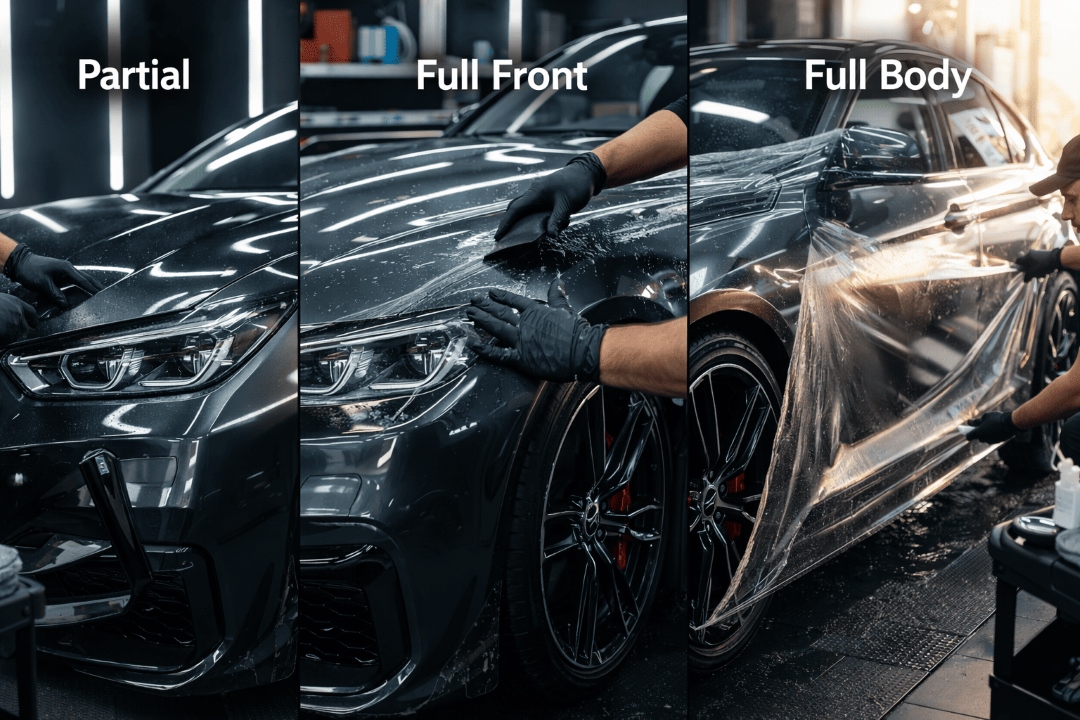
Most installers offer three standard coverage packages for paint protection film for cars, each of which is designed for different budgets and protection needs:
Partial PPF Coverage
This type of PPF coverage protects the high-impact areas at the front of the vehicle.
Full Front PPF Coverage
Covers the entire front impact zone where most of the rock chips occur.
Full Body PPF Coverage
This is the best PPF coverage for cars, as it protects all painted surfaces of the vehicle.
Some installers also offer custom PPF coverage packages, allowing car owners to protect specific panels such as door edges, rocker panels, or rear bumpers.
Partial PPF Coverage: Cost, Benefits & Limitations
Partial PPF coverage is the most affordable option for coverage and is designed to shield the areas that are most likely to encounter road debris.
Typical Coverage Areas
Partial coverage usually includes:
- Front bumper.
- Partial hood (typically 18 to 24 inches from the front edge)
- Partial front fenders.
- Side mirrors.
These areas are most vulnerable to rock chips and debris during everyday living.
Key Benefits
- Most budget-friendly PPF protection for car paint.
- Protects high-impact zones.
- Faster installation compared to larger packages.
Potential Drawback
As the film only covers a part of the hood and fenders, a visible film edge line may appear across the panels, particularly on darker vehicles.
Best Suited For
Partial PPF works best for the drivers who:
- Primarily drive in urban environments.
- Take short commutes.
- Want basic paint protection on a budget.
Full Front PPF Coverage: Best Value for Daily Drivers
Full front PPF is a popular type of PPF coverage among most car owners because it provides strong protection where it matters the most.
Typical Coverage Areas
Full front PPF coverage areas for cars usually include:
- Front bumper.
- Full hood
- Full front fenders.
- Side mirrors.
Some installers may also include headlights or front pillars, depending on the package.
Key Benefits
- No visible film line across the hood.
- Protects the entire front impact zone.
- Ideal for vehicles exposed to highway driving.
Why It’s Popular
Most rock chips and debris damage often occur on the front portion of the vehicle, making full front coverage a practical balance between cost and protection.
Best Suited For
Full front PPF coverage is ideal for:
- Daily drivers.
- Highway commuters.
- New car owners who want to preserve their factory paint.
- Drivers who want strong protection without the cost of full body coverage.
Full Body PPF: Maximum Protection for Your Car
Full body PPF is considered to be the best PPF coverage for cars, as it covers every painted panel of the vehicle.
Coverage Areas
Full body PPF coverage areas for cars usually include:
- Hood
- Front and rear bumpers.
- Front and rear fenders.
- Doors.
- Side mirrors.
- Roof.
- Trunk.
- Rocker panels.
Essentially, every painted surface receives a protective film coating, fully shielding it from damage.
Key Benefits
- Maximum protection from scratches, debris, and environmental damage.
- Seamless appearance with minimal visible edges.
- Helps preserve the vehicle’s resale value.
- Protects the expensive factory paint finishes.
Best Suited For
Full body PPF protection is commonly chosen by the owners of:
- Luxury vehicles.
- High-performance sports cars.
- Premium brands such as Tesla, Porsche, and BMW.
- Drivers who are planning for long-term ownership (5+ years).
Partial vs Full Front vs Full Body PPF: Detailed Comparison
With so many choices in the market, you may be wondering how to choose PPF coverage. Let’s do a detailed comparison of all three coverage options:
Feature | Partial PPF | Full Front PPF | Full Body PPF |
| Coverage | Limited front areas | Completed front section | Entire vehicle |
| Protection level | Basic | Moderate | Maximum |
| Visible Film Lines | Yes | No | No |
| Cost Range* | $600- $2000 | $1200 - $3500 | $3500 - $9000 |
| Best For | City driving | Daily drivers | Luxury vehicles |
*Estimate, according to the latest data.
How to Choose the Right PPF Coverage for Your Car
While doing a PPF coverage comparison, you need to consider some very important practical factors, such as:
Driving Habits
Drivers who frequently travel on highways or long-distance routes are more likely to encounter rock chips, gravel, and debris. These conditions typically justify full front or full body protection.
Budget
PPF installation costs can vary depending on the coverage area. Partial protection is affordable, but larger packages offer more comprehensive protection for cars.
Vehicle Value
High-end vehicles often feature premium paint finishes that can be expensive to repair. In these cases, choosing full-coverage paint protection film for cars can help protect the vehicle’s long-term value.
Ownership Duration
If you plan to keep your car for many years, full body PPF protection may provide the best long-term return by preventing paint damage over time.
Aesthetic Preference
Some drivers prefer a completely seamless appearance. Full front and full body coverage can eliminate any visible film edges across panels.
Which PPF Coverage is Best for Your Car? (Quick Guide)
Picking the right PPF coverage option for cars depends on how you use your vehicle.
When to Choose Partial PPF
- You want affordable protection.
- Your driving is mostly city-based.
- You want to protect key front areas without a large investment.
When to Choose Full Front PPF
- You drive on highways frequently.
- You want strong protection where damage occurs most.
- You want the best balance between cost and coverage.
When to Choose Full Body PPF
- You own a luxury or performance vehicle.
- You want maximum paint protection.
- You plan to keep your car for many years.
Is Full Body PPF Worth It? Cost vs Value Explained
For many car owners, this often becomes a recurring question: Is full-body PPF worth it? Let’s look at some reasons why it is:
Long-Term Paint Preservation:
Full body PPF protection for car paint shields the vehicle’s surface from scratches, debris, and environmental damage.
Reduced Repaint Costs
Professional paint repairs or resprays can be expensive. Car paint protection film helps prevent many types of paint damage before they occur.
Higher Resale Value
Vehicles with well-maintained original paint often command a higher resale price.
Protection for Premium Paint Finishes
Modern vehicles frequently feature metallic, matte or multi-layer paint finishes, which can be costly to repair. PPF helps maintain these finishes in excellent condition.
Final Thoughts: Which PPF Coverage Should You Choose?
PPF for cars is one of the most effective ways to guard a vehicle’s exterior from everyday damage. Whether it’s rock chips from highway driving, scratches from debris or UV fading caused by regular sun exposure, choosing the right paint protection film coverage can provide a long-lasting barrier that helps maintain your vehicle’s factory paint.
However, your choice also depends on your driving habits, budget, and vehicle value. While partial PPF offers basic protection, full front coverage is a popular choice for daily drivers. For those who want the highest level of protection, full body PPF protection provides complete coverage and long-term paint preservation.
Consult a professional PPF installer who can help you determine the best coverage option for your vehicle and ensure a high-quality installation.
FAQs on PPF Coverage
- What is paint protection film (PPF) coverage for cars?
Paint protection film coverage refers to the specific parts of a vehicle where the PPF is applied to protect the surface from scratches, rock chips and environmental damage. - What is the difference between partial PPF, full front PPF, and full body PPF?
Partial PPF covers select front panels, full front PPF protects the entire PPF protects the entire front impact zone and full body PPF covers every painted surface of the vehicle. - What areas are covered under full front PPF?
Full front PPF covers the front bumper, full front fenders and side mirrors. - Is full body PPF worth it for a new car?
Yes, for high-end or long-term vehicles, full body PPF protection can help preserve the original paint, reduce repair costs and maintain resale value. - Which PPF coverage option is best for daily drivers?
Full -front PPF is the best PPF coverage for daily drivers as it protects the areas most exposed to rock chips and road debris. - How long does paint protection film last on a car?
Most high-quality PPF products last for 5 to 10 years, depending on the brand, environmental condition and maintenance. - Can PPF be removed without damaging the original paint?
Yes. When installed correctly, PPF can be safely removed without damaging the factory paint. - How do I choose the right PPF coverage for my car?
Consider factors like your driving habits, budget, vehicle value and how long you plan to keep the car before choosing a coverage package.

 English
 German
 Spanish
 French
 Arabic
 Chinese
 Turkish
 Russian