


TPU vs PET Paint Protection Films: What Professional Installers Should Know
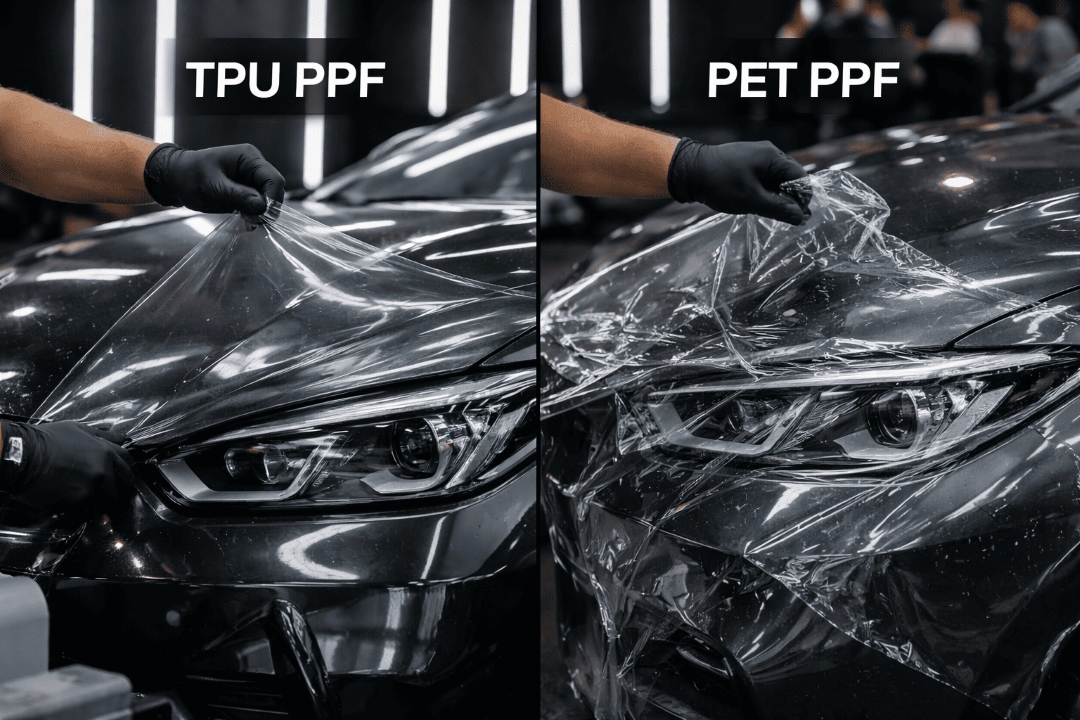
Modern paint protection film technology relies on two core materials: TPU (Thermoplastic Polyurethane) and PET (Polyethylene Terephthalate). While both materials are used to manufacture protective films for cars, there are a lot of differences between TPU vs PET paint protection films, especially when it comes to performance, durability, and protective capabilities. Understanding this distinction is essential for car owners who want to protect their vehicle’s exterior from everyday hazards.
Cars face constant threats such as rock chips, scratches, road debris, bug splatter, and UV exposure, all of which can damage the paint over time. Both TPU and PET PPFs shield the vehicle’s original paint from these threats, but the material used in both films directly impacts their effectiveness. Most modern premium PPF products are manufactured with TPU, widely regarded as the industry standard for high-performance paint protection. PET films, on the other hand, are used for low-cost protective applications or styling-focused wraps, where protection requirements are lower.
So, choosing the right material ensures your vehicle receives the appropriate level of protection for your driving habits, environment, and long-term ownership plans. In this blog, we will explore more about the differences between TPU vs PET PPFs, their durability, and do a material comparison for both.
What is TPU Paint Protection Film? (Key Features & Benefits)
TPU, or Thermoplastic Polyurethane, is the most commonly used material for premium paint protection films. It has exceptional elasticity and strength, and is a high-performance polymer that provides superior protection against mechanical and environmental damage.
Here are some key characteristics of TPU paint protection films:
- Highly flexible material: Thermoplastic polyurethane PPFs are extremely elastic and can stretch to smoothly conform to complex vehicle surfaces, curves, and edges.
- Excellent impact resistance: The material can also absorb energy from minor impacts such as road debris and small stones, helping prevent paint damage.
- Self-healing topcoat: Most TPU-based self-healing paint protection films have a top layer that allows minor scratches and swirl marks when exposed to sunlight or any kind of heat.
- Strong UV resistance: TPU films, such as the ones manufactured by Global Hi-Tech Films, are also made to resist UV radiation, which helps prevent the paint from fading, oxidizing, or discoloring.
- Long service life: A durable structure means TPU films usually last for 5 to 10+ years, with proper maintenance.
TPU paint protection films protect vehicles from the following:
- Rock chips.
- Minor scratches and swirl marks.
- Road debris.
- Bug splatter and bird droppings.
- UV exposure and environmental damage.
These capabilities have made TPU an industry standard for high-performance PPF installation.
What is PET Paint Protection Film? (Uses & Limitations Explained)
PET, or Polyethylene Terephthalate, is another polymer material that is sometimes used in manufacturing protective films, although it is commonly used in low-cost films or vinyl wrap products.
Below are the key characteristics of polyester PPF films:
- More rigid structure: PET is less flexible compared to TPU, limiting its ability to conform to curved surfaces.
- Thinner material composition: Many PET films have a thinner structure, which also reduces their impact resistance.
- Limited elasticity: PET films for car protection also cannot easily stretch around complex body panels.
- Shorter lifespan: PET-based PPFs generally last for 1 to 3 years, which makes them more suitable for short-term use.
PET films are commonly used for:
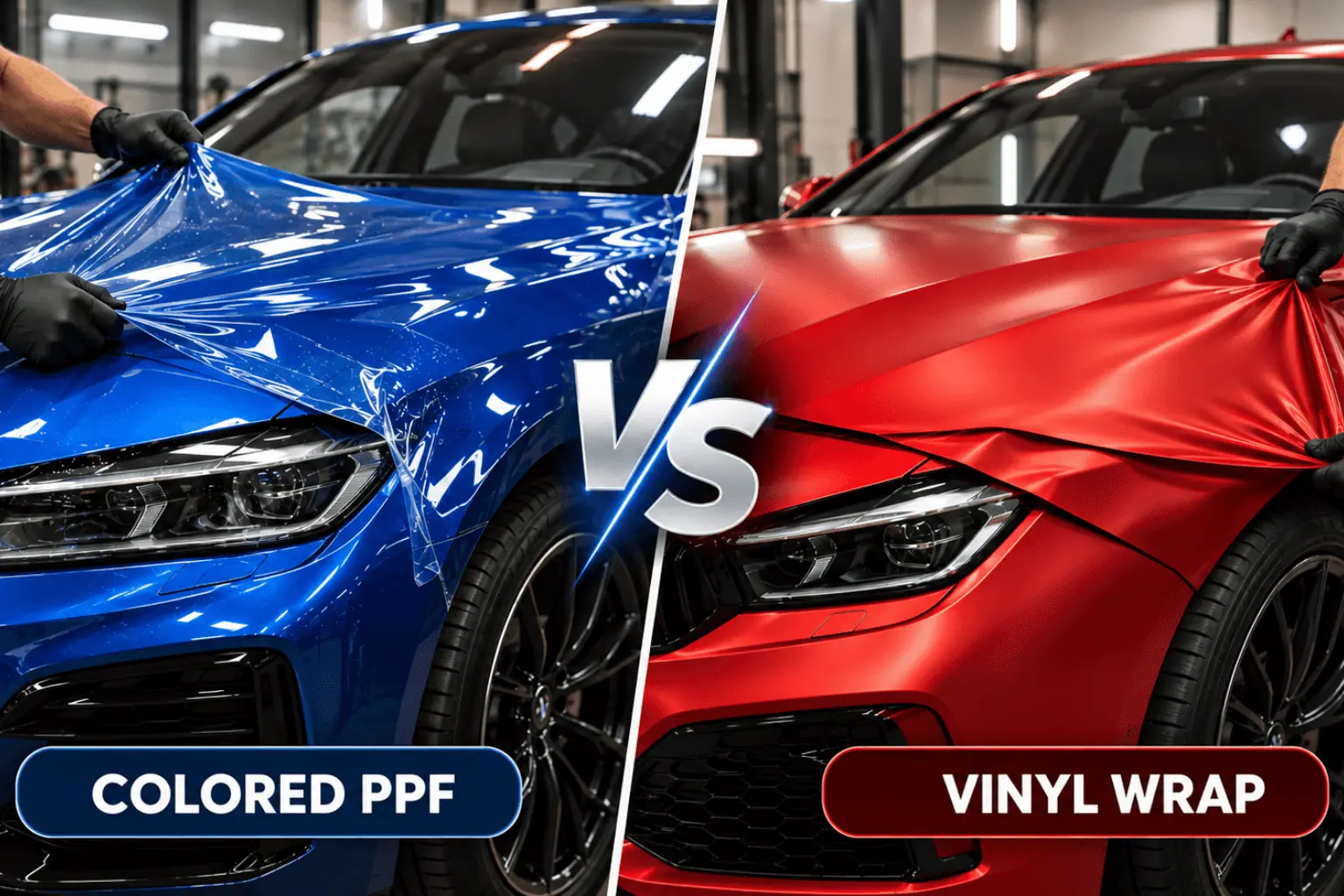
- Aesthetic wraps and color-change films.
- Temporary styling applications.
- Basic, short-term surface protection.
While PET paint protection films offer some level of surface protection, they are not
designed for long-term impact protection like TPU-based PPF.
TPU vs PET PPF: Key Differences That Impact Performance
When doing a PPF material comparison, professionals evaluate several factors such as protection level, durability, flexibility, and optical clarity.
Protection Level
The primary purpose of a PPF is to shield a vehicle’s paint from damage caused by road debris or UV rays:
- TPU films provide superior impact protection by absorbing energy from small stones, gravel, and road debris.
- PET films for car protection offer limited protection and mainly act as a surface barrier rather than an impact-absorbing layer.
As a result, TPU is significantly more effective at preventing rock chips and paint damage.
Self-Healing Technology
One of the most advanced features of modern PPF is its self-healing capability.
- TPU-based self-healing paint protection films include a self-healing top coat that is activated by heat. Minor scratches and swirl marks thus disappear when exposed to sunlight, warm water, and heat from the environment.
- PET paint protection films, on the other hand, do not have this feature, which means that scratches remain visible once they occur.
This PPF characteristic is one of the major reasons why TPU is preferred when it comes to long-term paint protection.
Durability and Lifespan
Another major TPU vs PET film difference lies in the expected lifespan of the film. Typical lifespan comparison is as follows:
- TPU paint protection film: 5 to 10 years.
- PET film: 1 to 3 years.
TPU films also offer strong resistance to:
- UV exposure.
- Yellowing.
- Cracking.
- Environmental wear.
PET films, however, may degrade faster under constant sun exposure and harsh driving conditions.
Flexibility and Installation
Material flexibility also plays an important role during installation.
TPU films:
- Highly elastic and stretchable.
- Easily conform to curved panels and complex vehicle shapes.
- Allow for smoother edge wrapping.
PET films:
- More rigid structure.
- Harder to install.
- Greater risk of lifting or bubbling around edges.
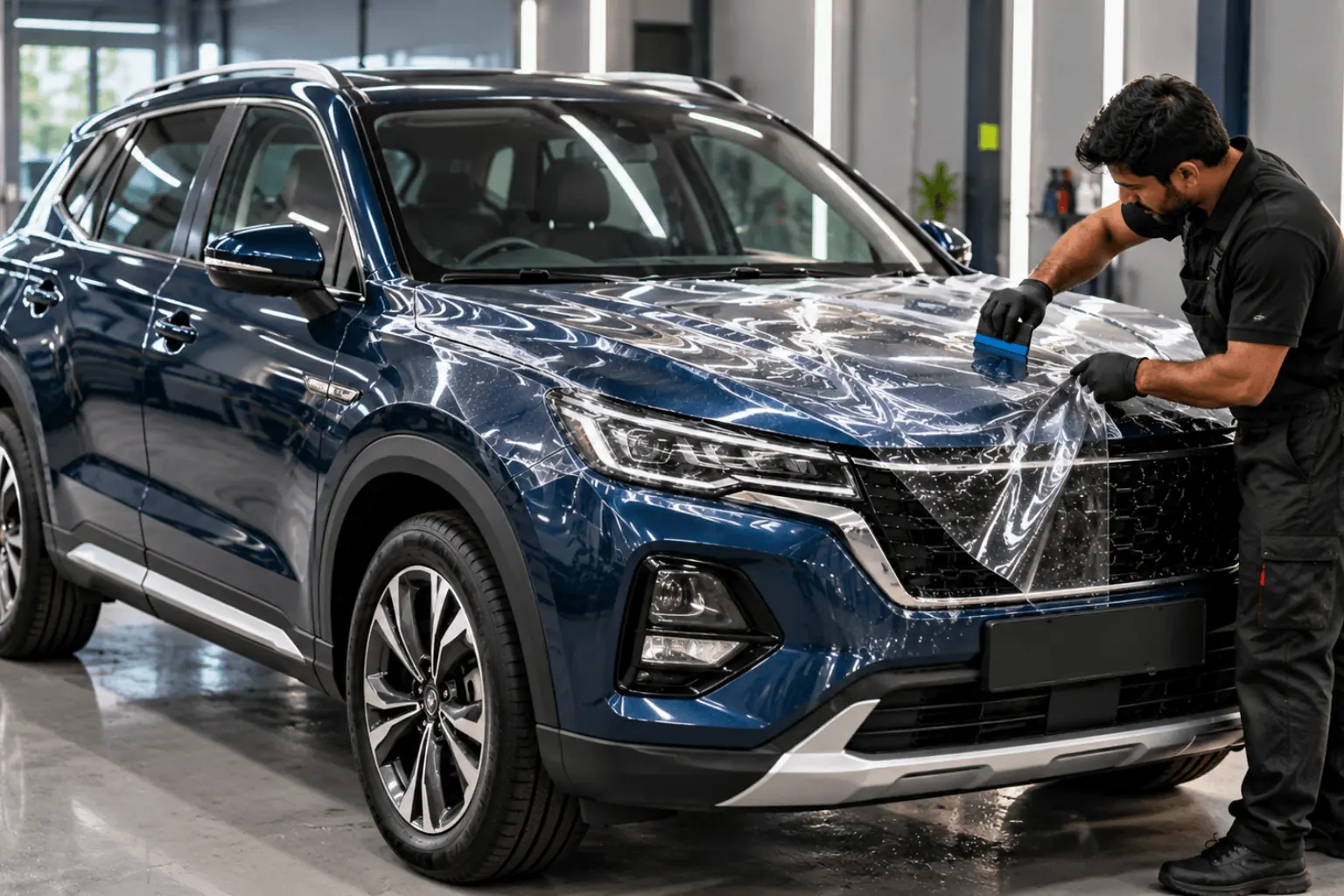
This flexibility makes the TPU paint protection films’ installation process more reliable and precise.
Optical Clarity and Finish
Paint protection films are designed to remain almost invisible once installed:
TPU films offer:
- Superior optical clarity.
- Near-invisible protection.
- Smooth high-gloss finish that enhances paint appearance.
PET films may show:
- Slight texture in certain lighting conditions.
- Reduced clarity compared to TPU films.
For car owners who want protection without altering the appearance of their vehicle, TPU provides a more refined finish.
TPU vs PET PPF Comparison Table (Installer Perspective)
Let’s take a deeper look at how PET vs TPU car films differ:
Feature | TPU Paint Protection Film | PET Film |
| Material | Thermoplastic Polyurethane | Polyester |
| Self-Healing | Yes | no |
| Durability | 5 - 10 years | 1 - 3 years |
| Flexibility | High | Low |
| Impact Protection | Excellent | Limited |
| UV Resistance | Strong | Moderate |
| Installation | Wet install | Dry or wet |
| Cost | Higher | Lower |
Most professional installers recommend TPU paint protection film for long-term shielding because they offer significantly better durability and performance.
TPU vs PET PPF Cost Breakdown: Price vs Value
The cost of most PPFs varies depending on the material used, the vehicle size, and the coverage area. Typical TPU vs PET film differences in the market when it comes to cost include:
- TPU paint protection films: $600 - $10,000 (depending on coverage area)
- PET Films: Typically $200 - $250 per section
The price difference mainly reflects:
- Higher material quality.
- Longer durability.
- Superior impact protection.
- Advanced features like self-healing technology.
The TPU PPF durability is longer, making the expensive upfront cost more effective over time.
How to Choose Between TPU and PET PPF
The choice you make depends on your priorities, budget, and driving conditions. So make sure you are aware of the TPU PPF benefits as well as the features of PET films.
Choose a TPU paint protection film if you:
- Want long-term paint protection.
- Frequently drive your car on highways and rough roads.
- Want self-healing scratch protection.
- Prefer premium-grade protection for your car’s paint.
Choose PET films if you:
- Want a budget-friendly option.
- Want temporary styling or wraps.
- Only need short-term protection.
- Do not want long-term durability.
Why Installers Prefer TPU Over PET
Professional PPF installers prefer thermoplastic polyurethane PPFs since they provide several technical advantages. Reasons include:
- Greater stretchability, which allows for easier installation.
- Better contour fitting on complex vehicle panels.
- Higher resistance to environmental damage.
- Superior long-term durability.
These TPU PPF benefits have made the material an industry standard for high-end paint protection film installations.
Final Verdict: TPU vs PET PPF – Which One Should You Choose?
TPU and PET are two different materials used in manufacturing paint protection films, but both serve very different purposes. When you look at the distinctions between TPU vs PET paint protection films, you will see that:
- TPU PPFs offer superior durability, impact resistance, and advanced features such as self-healing technology.
- PET films are generally used for short-term applications such as styling wraps or basic surface protection.
For vehicle owners looking for maximum durability and long-term paint protection, TPU paint protection films are the preferred and most reliable choice.
Consult a professional PPF installer to help determine the right film material and coverage level for your vehicle.
FAQs on TPU vs PET PPF
- What is the difference between TPU and PET paint protection film?
TPU is a flexible and durable material with self-healing properties designed for long-term paint protection. PET is more rigid and typically used for short-term protective or aesthetic films. - Is TPU better than PET for car paint protection?
Yes. TPU offers better impact resistance, longer lifespan, and self-healing technology that makes it more suitable for protecting vehicle paint. - How long does TPU paint protection film last?
Most TPU films last 5 to more than 10 years, depending on maintenance, driving conditions, and environmental exposure. - Does PET paint protection film have self-healing properties?
No. PET films do not have self-healing technology, so scratches and swirl marks remain visible once they occur. - Why do professional installers prefer TPU films?
TPU films are easier to stretch and install, fit complex curves better, and offer superior long-term protection compared to PET films. - Is TPU paint protection film worth the higher cost?
For most vehicle owners, yes. It has a longer lifespan, better protection, and self-healing capabilities, which often justify the higher initial investment. - Can PET film protect against rock chips and scratches?
PET films provide limited surface protection, but are not as effective as TPU films at absorbing impact from rocks and debris. - Which PPF material is best for long-term paint protection?
TPU films are widely considered the best PPF material for cars in the long-run.

 English
 German
 Spanish
 French
 Arabic
 Chinese
 Turkish
 Russian